All posts by SRH Matters

Prevalence of homosexuality in men is stable throughout time since many carry the genes

Prevalence of homosexuality in men is stable throughout time since many carry the genes

2016-05-02

Around half of all heterosexual men and women potentially carry so-called homosexuality genes that are passed on from one generation to the next. This has helped homosexuality to be present among humans throughout history and in all cultures, even though homosexual men normally do not have many descendants who can directly inherit their genes. This idea is reported by Giorgi Chaladze of the Ilia State University in Georgia, and published in Springer’s journalArchives of Sexual Behavior. Chaladze used a computational model that, among others, includes aspects of heredity and the tendency of homosexual men to come from larger families.

According to previous research, sexual orientation is influenced to a degree by genetic factors and is therefore heritable. Chaladze says this poses a problem from an evolutionary perspective, because homosexual men tend not to have many offspring to whom they can provide their genetic material. In fact, they have on average five times fewer children than their heterosexual counterparts.

Chaladze used an individual-based genetic model to explain the stable, yet persistent, occurrence of homosexuality within larger populations. He took into account findings from recent studies that show that homosexual men tend to come from larger families. These suggest that the genes responsible for homosexuality in men increase fecundity (the actual number of children someone has) among their female family members, who also carry the genes. Other reports also suggest that many heterosexual men are carriers of the genes that could predispose someone to homosexuality.

Based on Chaladze’s calculations, male homosexuality is maintained in a population at low and stable frequencies if half of the men and roughly more than half of the women carry genes that predispose men to homosexuality.

“The trend of female family members of homosexual men to have more offspring can help explain the persistence of homosexuality, if we also consider that those males who have such genes are not always homosexuals,” says Chaladze.

The possibility that many heterosexual men are carriers can also explain why estimates of the number of men who have reported any same-sex sexual behavior and same-sex sexual attraction are much higher than estimates of those who self-identify as homosexual or bisexual. According to Chaladze, non-homosexual male carriers might sometimes manifest interest in homosexual behavior without having a homosexual identity.

The possibility that a large percentage of heterosexual people are carriers of genetic material predisposing to homosexuality has implications for genomic studies. Researchers should therefore consider including participants who do not have homosexual relatives in such studies.


Story Source:

The above post is reprinted from materials provided by Springer. Note: Materials may be edited for content and length.


Journal Reference:

  1. Chaladze, G. Heterosexual Male Carriers Could Explain Persistence of Homosexuality in Men: Individual-Based Simulations of an X-Linked Inheritance Model. Archives of Sexual Behavior, 2016 DOI:10.1007/s10508-016-0742-2

What scientists know — and don’t know — about sexual orientation

What scientists know — and don’t know — about sexual orientation

Over the last 50 years, political rights for lesbian, gay, and bisexual (LGB) individuals have significantly broadened in some countries, while they have narrowed in others. In many parts of the world, political and popular support for LGB rights hinges on questions about the prevalence, causes, and consequences of non-heterosexual orientations.

In a new report, a team of researchers bring the latest science to bear on these issues, providing a comprehensive review of the scientific research on sexual orientation.

“We wanted to write a comprehensive review that was ‘state of the art’–in doing so, we also wanted to correct important misconceptions about the link between scientific findings and political agendas,” explains psychology researcher and lead author J. Michael Bailey of Northwestern University.

The report is published in Psychological Science in the Public Interest, a journal of the Association for Psychological Science, and is accompanied by a commentary by psychological scientist Ritch Savin-Williams of Cornell University.

Based on their review of the latest science, Bailey and colleagues draw several conclusions about the nature of sexual orientation:

— Across cultures, a “small but nontrivial” percentage of people have non-heterosexual feelings. The specific expression of sexual orientation varies widely according to cultural norms and traditions, but research suggests that individuals’ sexual feelings are likely to develop in similar ways around the world. — Men’s and women’s sexual orientations manifest in different ways: Men’s sexual orientation is more closely linked to their patterns of sexual arousal than women’s sexual orientation is. — Various biological factors–including prenatal hormones and specific genetic profiles–are likely to contribute to sexual orientation, though they are not the sole cause. Scientific evidence suggests that biological and non-social environmental factors jointly influence sexual orientation. — Scientific findings do not support the notion that sexual orientation can be taught or learned through social means. And there is little evidence to suggest that non-heterosexual orientations become more common with increased social tolerance.

Despite these points of consensus, some aspects of sexual orientation are not as clear-cut. While Bailey and colleagues describe sexual orientation as primarily falling into categories–lesbian, gay, or bisexual–Savin-Williams argues that considerable evidence supports a sexual continuum. He notes that the label ‘bisexual’ serves as a catchall for diverse sexual orientations that fall in between heterosexual and homosexual. As a result, his estimate of the prevalence of the nonheterosexual population is double that of Bailey and colleagues.

From their review, the authors also conclude that gender nonconformity in childhood–behaving in ways that do not align with gender stereotypes–predicts non-heterosexuality in adulthood. According to Savin-Williams, the degree to which this is true could be a consequence of how study participants are typically recruited and may not be accurate among more representative samples of nonheterosexual individuals.

The report authors and Savin-Williams agree on most issues, including that a major limitation of existing research relates to how sexual orientation is measured. Most researchers view sexual orientation as having several components–including sexual behavior, sexual identity, sexual attraction, and physiological sexual arousal–and yet, the majority of scientific studies focus solely on self-reported sexual attraction. The decision to use these self-report measures is typically made for pragmatic reasons, but it necessarily limits the conclusions that can be drawn about how different aspects of sexual orientation vary by individual, by culture, or by time.

Additionally, individual and cultural stigma likely results in underreporting of non-heterosexual behaviors and orientations across the board.

Perhaps the most prominent question in political and public debates is whether people can “choose” to have non-heterosexual orientations. Because sexual orientation is based on desire and we do not “choose” our desires, the authors argue, this question is illogical.

Ultimately, these kinds of debates come down to moral issues, not scientific ones: “People have often thought unclearly about sexual orientation and the political consequences of research,” Bailey adds. “The question of whether sexual orientation is ‘chosen’ has divided pro- and anti-gay forces for decades, but the question of causation is mostly irrelevant to the culture wars.”

The fact that issues related to sexual orientation continue to be hotly debated in the public arena underscores the need for more and better research.

“Sexual orientation is an important human trait, and we should study it without fear, and without political constraint,” Bailey argues. “The more controversial a topic, the more we should invest in acquiring unbiased knowledge and science is the best way to acquire unbiased knowledge.”


Story Source:

The above post is reprinted from materials provided by Association for Psychological Science. Note: Materials may be edited for content and length.


Journal Reference:

  1. J. M. Bailey, P. L. Vasey, L. M. Diamond, S. M. Breedlove, E. Vilain, M. Epprecht. Sexual Orientation, Controversy, and Science.Psychological Science in the Public Interest, 2016; 17 (2): 45 DOI:10.1177/1529100616637616

Survey: Mental health stigmas are shifting

Survey: Mental health stigmas are shifting

2016-04-25

Mental health has a long-standing public perception problem, but the stigma appears to be shifting, at least in the United States, a new survey reveals.?Results from a national online survey on mental health, anxiety and suicide indicate that 90% of Americans value mental and physical health equally.

“Progress is being made in how American adults view mental health, and the important role it plays in our everyday lives. People see connection between mental health and overall well-being, our ability to function at work and at home and how we view the world around us,” said Dr. Christine Moutier, chief medical officer of the American Foundation for Suicide Prevention.
The foundation commissioned a Harris Poll with the Anxiety and Depression Association of America and the National Action Alliance for Suicide Prevention to gauge public opinion on mental health, anxiety and suicide awareness.
In August, the Mental Health and Suicide Survey was emailed to a random sampling of individuals age 18 and older who live in the United States.
Despite recognizing a link between mental health and overall well-being, the majority of survey participants view access to mental health care inaccessible and costly.?

How Americans view mental health conditions

Although most people surveyed identified life circumstances, depression, post-traumatic stress disorder and bipolar disorder as risk factors for suicide, more than half — 53% — did not know that people with anxiety disorders are also at risk for suicide, the survey found.
“The findings provide key insights into how Americans view mental health conditions, life circumstances, barriers for seeking help and their understanding of the risk factors for suicide,” said Dr. Doryn Chervin, executive secretary of the National Action Alliance for Suicide Prevention.
Though psychiatrists say women are more likely than men to have suicidal thoughts, the survey indicates that women are also more likely than men to receive mental health treatment and more likely to report experiencing anxiety and depressive disorders.
Men, the survey reveals, are less likely to report anxiety and depressive disorders and more likely than women to report substance-related conditions.
Between 1999 and 2013, nationwide suicide rates have increased 19.9%, according to the Centers for Disease Control and Prevention. “Men are four times more likely than women to die from suicide and rates are especially higher for middle-aged, white, non-Hispanic men 35 to 65 years old,” said Dr. Alex Crosby, branch chief with the CDC’s Division of Violence Prevention.
Despite the statistics, nearly all survey respondents — 94% — think suicide is sometimes or often preventable.
“Effectively diagnosing and treating both anxiety disorders and depression, especially when they co-occur, are critical pathways to intervening and reducing the suicide crisis,” said Dr. Mark Pollack, president of the Anxiety and Depression Association of America.

Seeking care seen as a sign of strength

The survey also revealed that people ages 18 to 24 are becoming more comfortable with seeking medical help and are more likely to consider it a sign of strength to see a medical health professional, compared with older people.
Join the conversation

See the latest news and share your comments with CNN Health on Facebook andTwitter.

“There are many steps people can take to help if they know someone who is suicidal,” Moutier said. “Reach out to mental health providers, call the National Suicide Prevention Lifeline — 1-800-273-TALK (8255) — and make sure the person is not alone until they can get help.
“Talking helps saves lives.”
While psychiatrists affiliated and not affiliated with the survey acknowledge the steady shift in people wanting to understand mental health better, many say more research needs to be done because a stigma still lingers.
“It’s a great step forward to see a public increase in awareness on mental health issues, but there are still limitations when it comes to gaining access to care,” said Dr. Ranna Parekh, director of the Division of Diversity and Health Equity at the American Psychiatric Association?, which was not affiliated with the survey.
“There needs to be an increase in the number of trained mental health professionals, proper facilities and first-response support across the nation in order to treat all the patients who need the special care.”

New Test Can Detect Infertility Genes

New Test Can Detect Infertility Genes

Around 15% of couples have difficulty conceiving. 50% of the time the problem lies with the man. In many cases, faulty genes are the root cause of the problem. But up until recently, there was no way of knowing what these genetic issues were. Cornell University researchers have now come up with a way to detect mutations in genes affecting fertility. Their findings were published in the Proceedings of the National Academy of Sciences. Common genetic variations are known as single nucleotide polymorphisms (SNPs). Every SNP affects a specific nucleotide or building block of DNA. Researchers say patients struggling with infertility can have their DNA sequenced. If doctors can figure out which SNP is defective, they can provide a genetic diagnosis. This may someday lead to intervention on the genetic level. Fertility specialists could simply detect faulty SNP’s and repair or replace them.

To locate the SNP causing the problem today, the genomes of healthy people are placed side-by-side with those having fertility problems, to locate where differences occur. But this method has been ineffective so far. There are too many genes responsible for fertilization, and the process is too complex. John Schimenti the director of the Center for Vertebrate Genomics along with Priti Singh, a postdoctoral fellow in Schimeti’s department, came up with this new method. These researchers used laboratory mice. They looked at a database of all known mice genes responsible for infertility. These have been arrived upon through testing which is not possible in humans. Then these genes were compared to genetic variation within the human genome. They found SNPs associated within four different genes that are thought to cause fertility problems in our species. Then these SNPs were tested in mice. Through this practice, researchers are beginning to identify those SNPs that cause human infertility. Though this genetic testing is not available yet, couples trying for six months to a year without conceiving should consult a physician. Both partners should be tested. Men should see an urologist or fertility specialist.

Special Underwear Safeguards Male Fertility

Special Underwear Safeguards Male Fertility

2016-03-16

What underwear you wear can affect your fertility. Most men know that when they are trying to conceive with their partner, they should avoid anything that makes the testicles warmer. Sperm is produced at a lower temperature than the body naturally resides, which is why they hang away from the body and adjust themselves according to the ambient temperature. That means when trying to conceive, one should wear boxers over briefs, avoid hot baths, Jacuzzi’s, the steam room, and the sauna. One place men often fail to consider is their cell phone. How does radiation emitted from a smart phone affect male fertility? This issue has been debated for some time in the medical community. One 2014 University of Exeter study found a link between electromagnetic radiation and a low sperm count. But it was not definitive. Most experts say not to leave your phone in your pocket for long periods of time, just in case. Instead, when you are working or at rest place it on a table, or other hard surface some distance away from you, so as to limit the amount of radiation exposure, particularly the sex organs. The same goes for your tablet or laptop. Work at a table or place a hard surface between you and your lap.


If this doesn’t sound appealing, hit the internet and buy yourself some new drawers. A line of special male undergarments to safeguard male fertility is now available for purchase. It is called Wireless Armour underwear. Sir Richard Branson called them “underpants for superheroes.” The manufacturer says this underwear line protects the male sex organs from the kind of radiation emitted from laptops, tablets, or cell phones. A pure silver mesh has been woven into each pair, making them 99.9% effective against such radiation. British scientist Joseph Perkin invented them. Perkin said he became increasingly aware over the years that his personal electronic devices were exposing him to more and more radiation. With his background in physics, he went to work devising a simple solution. Radiation exposure is not the only possible cause of male infertility. Many things may cause it. Couples who haven’t conceived after six months to a year of unprotected sex should each seek out a physician. The man should check his wardrobe, but also with an urologist.

My boyfriend’s erectile issues are affecting my confidence

My boyfriend’s erectile issues are affecting my confidence

2016-03-14

Q. Sometimes my boyfriend and I have great sex — but occasionally he struggles to get enough of an erection for penetrative sex.

I find it difficult because it affects my confidence, and of course his. What could the reason be?

A. The cause could be psychological, or it could be an indication of an underlying health problem. Either way, your boyfriend needs to see a doctor.

UnhappyCoupleInBed2016_large

Sexual health does not exist in a realm of its own. It is integral to, and an important marker of, everyone’s general health.

In men, erectile difficulties are associated with a host of serious conditions, such as diabetes, hypertension, cardiovascular disease, peripheral vascular disease and other neurologic and endocrine disorders.

Before you get too anxious, however, I should add that the bulk of research into erectile dysfunction (ED) has been carried out on men over 50 and these conditions also tend to be more common in older men, so there is uncertainty about what is cause and what is effect.

Because erectile function declines with age, when younger men go to a GP with erectile difficulties there is a tendency to presume that the problem is psychological.

However, younger men with ED should always be screened for underlying health problems — a recent study confirmed that in men under 40 ED may be the first clinical sign of the thickening and hardening of the walls of the arteries, which is a precursor to heart disease.

One of the most important clues about the nature of a man’s ED is whether or not he can achieve a rigid erection during manual masturbation.

If your boyfriend can sustain a firm erection during solo sex but he fails when you try to have sex with each other, his problem may relate to stress, anxiety or depression.

If, however, he can’t sustain a firm erection during masturbation and he doesn’t experience nocturnal penile tumescence, the problem is more likely to be related to a health condition.

Psychological ED can often be traced to difficult life events, such as job loss, bereavement, or relationship problems, but it can also be triggered by stressful sexual events.

All men, no matter what their age, experience the occasional uncooperative erection. Hangovers, for example, make it more difficult to get an erection and because hangovers also increase anxiety, they can set up a nasty feedback loop where a failed erection causes performance anxiety, which, in turn, inhibits erection.

Whatever the cause of your boyfriend’s problem, the one thing you need to know is that it is not a reflection of how attracted he is to you.

Try not to take it personally and do your best to encourage him to get a diagnosis as soon as possible. It is very difficult for young men to process the implications of ED, so your support will be hugely important.

Although this might seem like an insurmountable hurdle now, couples who have to deal with sexual difficulties often find that being forced to talk openly to each other about sex establishes much more open and honest lines of communication, and this improves their overall satisfaction within the relationship.

The good news is that there is an ever-increasing range of treatments available to treat ED, so with the right medical or psychological help, he should be able to resolve the problem.

In the meantime, focus on sustaining intimacy in any way you can.

Stepping It Up For Women’s HIV Prevention

Stepping It Up For Women’s HIV Prevention

By Shayna Buhler, Senior Program Officer, Interagency Coalition on AIDS and Development (ICAD)

When it comes to HIV, there’s a long way to go to Step it up For Gender Parity by 2030, but progress is being made on several fronts. Key to addressing HIV among women and the gender inequities that fuel the epidemic among them, is the search for new prevention options that make sense in women’s lives and give them the power to make decisions about their own sexual and reproductive health, including HIV prevention. Women continue to be at disproportionately high risk of HIV infection and AIDS is the leading cause of death worldwide for women of reproductive age.

Many women around the world are placed in situations where they are often unable to negotiate with their partners to be faithful or to use condoms. Stepping it up for gender parity requires that women have access to a range of HIV prevention options, including those that they can use without partner involvement if they choose. Recent advances in oral pre-exposure prophylaxis have contributed to an expanding set of options, and two weeks ago, the results of two vaginal microbicide trials were released, taking us one momentous step forward along this path.

Microbicides are biomedical products being developed to protect healthy people from becoming infected with HIV during sex. Both the Ring Study, led by the International Partnership for Microbicides (IPM), and ASPIRE, led by the US national Institutes of Health -funded Microbicide Trials Network (MTN) demonstrated that a monthly vaginal ring containing the anti-retroviral drug dapivarine worked to safely reduce the risk of HIV infection among the women who wore them. This was the first time that two studies have confirmed that a vaginal microbicide can safely offer protection against HIV. Participants from this and other trials, their communities, prevention advocates and researchers have been working and waiting for this moment for a long time.

The results of the two trials were positive but not overwhelmingly so. The trial showed that compared to the placebo, the monthly dapivarine ring reduced the risk of HIV infection by 31 percent and 27 percent respectively. Much more will be learned as the data continues to be analyzed but a couple of things seem clear. One, the ring works much better when it is used consistently. It works best when it is kept in for the full 30 days and then replaced with a new ring. This is not surprising. We have learned of the importance of consistent use with oral pre-exposure prophylaxis and from previous microbicide trials.

We know this to be true for condoms as well– if they aren’t used consistently and correctly, they just don’t work as well. We also know that the women in the trial removed a ring that to their knowledge may have contained either dapivarine or a placebo, and that dapivarine may or may not work to prevent HIV infection. They were being reminded of these uncertainties at every clinic visit. In Open Label Extension studies that will follow, in which participants from both placebo and dapivarine arms of the trial can participate and access the monthly dapivarine ring (without being blinded), we will be able to get a much clearer picture of how consistently women might use a product that they know contains a drug that has been proven to work.

The studies also indicate that the dapivarine ring showed higher efficacy among women over the age of 21 and showed little to no protection in women ages 18 to 21. More research and analysis will help us to understand whether this is due to different levels of consistency in usage, or due to some other factor such as biological difference.

Young women desperately need more prevention options–globally, they face excessively high rates of HV infection, and may have less power than older women to negotiate the terms of their sexual relationships. But women aged 22 to 26 also have extremely high rates of HIV infection and we cannot underestimate the value of expanding prevention options for this age group.

We have only to look at the example of birth control to be reminded that as women’s lives change, so too will their decisions around sexual and reproductive health. A woman can go through several different birth control options throughout the reproductive life cycle, depending on what she has access to, her lifestyle, the level of risk she is willing to take on, her changing preferences and her biology.

There is no product that will be right for all women, and this highlights the necessity of developing a range of accessible options and to working with young women to figure out what they can and will use as HIV prevention, and of ensuring that young women have access to all prevention options, even if they won’t all choose to use them.

In September 2015, world leaders adopted the 2030 Agenda for Sustainable Development, which includes a set of 17 goals interlinked to end poverty, fight inequality and injustice, and tackle climate change by 2030. Preventing new HIV infections among women through an expanded range of prevention options has the potential to have an incredible impact on the Sustainable Development Goals, from addressing food security, advancing gender equity, building healthier communities — all contributing to economic growth.

Increasing the number of women who are living without HIV, and who have control over their sexual and reproductive health and rights, can face fewer challenges in going to school or work, caring for their children, giving birth to HIV negative children, and facing fewer strains on resources, which is a critical step towards gender equality.

Developing and providing women with access to and knowledge about tools to make decisions about their sexual and reproductive health, possibly with and possibly without negotiation with their partners, is an incredible step towards gender equality. This International Women’s Day, the recent trial results are cause for celebration and call for the redoubling of advocacy efforts to ensure that safe and effective products make it to the hands of the women who need them and that research and development continue to increase the number of options available to all women to prevent HIV infection.


Shayna Buhler
 is a Senior Program Officer with the Interagency Coalition on AIDS and Development (ICAD). ICAD provides leadership in the response of Canadian international development organizations and Canadian HIV organizations in reducing the impact of the global HIV and AIDS epidemic.

2016-03-11-1457722243-8471788-BannerHuffPoIWD2016.jpg

This blog is part of an International Women’s Day series produced by theInteragency Coalition on AIDS and Development (ICAD) in recognition of International Women’s Day 2016 (March 8). The series runs during the week of March 7, 2016 and will feature a selection of blogs written by our member and partner organizations who will share their broad range. Each provides their perspective and their insight on what must be done to achieve UN Women’s campaign of “Planet 50-50 by 2030: Step It Up for Gender Equality” as we embark on the race to meet our 2030 Goals for Sustainable Development.

Disclaimer: The views and opinions expressed in this blog series are those of the authors and do not necessarily reflect those of ICAD.

Can Testosterone Treatment Turn Back the Clock? Testosterone supplementation may improve sexual function in older men

Can Testosterone Treatment Turn Back the Clock? Testosterone supplementation may improve sexual function in older men

2016-03-08

It’s no secret that the privilege of aging comes with inevitable declines in health. As men age, they also see a decline in testosterone levels. New research tries to determine whether testosterone treatments can give men back some of their lost vitality.

dreamstime_m_57776639

A team of researchers from the University of Pennsylvania School of Medicine conducted seven Testosterone Trials (TTrials), which were designed to see if testosterone therapy could relieve the symptoms of withdrawal from the hormone.

To conduct the study, the team enrolled 790 men, ages 65 and older, at 12 sites across America. All of the participants had lower testosterone levels than young healthy men, low sexual function, difficulty walking or low vitality.

The men were randomly selected to receive either a testosterone gel or placebo gel, which was applied daily for a year. The trial was double blind, meaning neither the researchers nor participants knew who was taking which gel. Researchers measured testosterone levels periodically for a year and monitored prostate and cardiovascular problems.

The research team found that among the men with low sexual function, testosterone treatment modestly improved sexual activity, sexual desire and erectile function compared to the placebo. Among men in all three trials, walking speed and distance also improved with the testosterone treatment.

Though testosterone treatment didn’t significantly affect fatigue symptoms, men in all three groups who received the testosterone reported slight improvements in mood, energy and depressive symptoms.

The study was led by Dr. Peter J. Snyder from the University of Pennsylvania School of Medicine.

“The results of the TTrials show for the first time that testosterone treatment of older men who have unequivocally low testosterone levels does have some benefit,” Dr. Snyder said in the press release. “However, decisions about testosterone treatment for these men will also depend on the results of the other four trials.”

According to the study, researchers found few adverse effects from testosterone treatment. The authors emphasized that larger and longer studies are needed to assess the risk of testosterone treatment in older men.

Researchers said that older men seeking testosterone treatment should consult with a physician.

The results for the first three elements—sexual function, walking and vitality—were reported February 18 in theNew England Journal of Medicine. Results for other outcomes, including cardiovascular, bone density, cognition, and anemia, will be reported in future papers.

The study was funded in part by The National Institute on Aging-The National Institute of Health.

The authors disclosed several potential conflicts of interest, including that Dr. Snyder reported receiving consulting fees from Watson Laboratories. Co-author Dr. Bhasin received fees to serve on advisory boards from Eli Lily and Sanofi, consulting fees from AbbVie and grant support from Regeneron Pharmaceuticals, Eli Lily, AbbVie and Novartis.

Apps for Managing ED

Apps for Managing ED

Health-related apps have exploded on the internet, for both operating systems. It was only a matter of time before those that help to diagnose, manage, or treat ED came into being. There are several on the market today for those who have found that their performance on many different occasions was less than stellar. Some of these apps can give some discreet insight into what might be going on. Apple has an app called “Fire Up Your Sex Drive.” It does seem to make exorbitant claims for itself. The apps purveyor’s claim that not only does it address ED, but kicks one’s libido into high gear. After just 20 days, your sexuality should be advanced by over 80%, developer’s claim. They also say that using this app is the equivalent of taking Viagra. It works by sending out high-frequency alpha waves which will supposedly synchronize to the user’s own brain waves. After slapping down $2.99, a user has to listen to the app for six minutes, once a day. This is thought to stimulate the endocrine system into producing more testosterone, ramping up the sex drive and helping to reverse ED. Trouble is, most men with ED have it because of a physical problem, such as clogged penile arteries. In this case, alpha waves would do little to reverse it. Unfortunately, there is no evidence that this in fact cures the condition.

shutterstock_160559990

Another out of Bangalore, India is called, “Dr. Vasan’s CurED” app. Here, the user answers a series of questions to see if they in fact do have ED. If so, it also determines how severe it is. The app utilizes two professional metrics, the International Index of Erectile Function and Sexual Health Inventory for Men. If the patient receives a poor result, it can even help him contact a doctor. Lastly, there is the Erectile Dysfunction Self-Test. Available on the Google Play store, this app gives a four part, professional screening. Created by an Austrian couple where he is a psychotherapist and she a couple’s and sex therapist, the app gives a fairly accurate assessment and tips to improve the situation. Some of these apps may be helpful. But nothing can replace the experience of seeing a physician or urologist in the flesh and receiving a proper examination. These experts can help determine what is causing ED and how best to cure it. Contact a doctor or urologist near you should you be experiencing ED.

#ThatsNotLove: Helping teens spot signs of relationship abuse

#ThatsNotLove: Helping teens spot signs of relationship abuse

2016-03-03

By Kelly Wallace, CNN

Looking back, Mattis Collier, now 20 and a junior at the University of South Carolina, can see all the warning signs.

“It was a very quick relationship. I didn’t know him very well … but the jealousy, the rage, all of that stuff came pretty soon after,” said Collier about her ex-boyfriend, whom she started dating early in high school.

There was so much isolation, she says, remembering how he went through her phone one time, deleting all of her male friends in her contacts and on Facebook, and how he told her she couldn’t talk to guys or go to parties.

Reluctant to get too specific, she says the relationship was abusive in multiple ways. Ultimately, she cut off communication with him after she started college.

“I was very blind to the situation, and you know, when it’s your first love and all of that, you really think that that kind of thing is, ‘Oh it won’t happen again,’ or ‘He was just so mad,’ or ‘I lied to him so I deserved that,’ but it progressively got worse.”

Yeardley Love was beaten to death by her ex-boyfriend in 2010.

This summer, Collier’s father wore a “One Love” baseball cap to support the One Love Foundation — an organization created in honor of Yeardley Love, the University of Virginia lacrosse player who was beaten to death by her ex-boyfriend just three weeks before she would have graduated in May 2010.

Collier’s father encouraged her to check out the foundation. “I think that was his way of saying, ‘I’m wearing this hat in honor of a girl that was not as lucky as you.'”

So one night she went up to her room and looked up every news article and video she could find about One Love, and made a decision to create a campus organization called Team One Love at her college this past fall. “I was like, ‘OK, if I don’t do this for anyone else, I’m going to do it for myself.'”
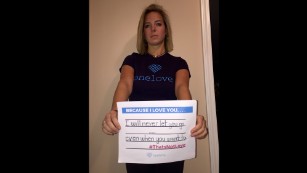
Mattis Collier's sign says, "I will never let you go even when you want to. #ThatsNotLove"

There are now 40 active Team One Loves on college campuses across the country and nearly 6,000 Team One Love members. The goal is for the students to take the lead in educating and empowering their peers about the signs and dangers of relationship abuse. It’s all part of a #ThatsNotLove campaign that One Love Foundation officially launched back in October.

‘Every kid has a stake in solving this problem’


But this goes way beyond a campaign. The One Love Foundation hopes #ThatsNotLove starts a movement.

“I think the idea behind #ThatsNotLove is how can we think of a lot of different, creative ways to emphasize the same core message, which is that there is a difference between relationships that are about love and relationships that are about control, that you can see in some of the earliest phases of a relationship behaviors that are healthy and unhealthy,” said Katie Hood, chief executive officer of the One Love Foundation.

“We’re trying to sort of make this very clear, that every kid has a stake in solving this problem. Every kid has a stake in working for change and thereby make it easier for people to do so,” she said.

To drill that point home and get to teens and college students where they are — on social media — One Love worked with an outside agency to create “couplets,” eight digital shorts featuring animated emojis, which in a very clear-cut way indicate how intensity, obsession, isolation, disrespect, blame, control, anger and put-downs are most definitely not love.

Since the couplets were launched this month in honor of Teen Dating Violence Awareness and Protection Month, they have been viewed nearly 5 million times and counting, according to One Love.

“They demonstrate exactly what we’re trying to say with ‘That’s not love,’ but they do it a lighthearted way,” said Sharon Love, Yeardley’s mother and the founder of the One Love Foundation. “They’re not threatening. They’re very simple but they bring the point home directly.”

Added Lexie Love Hodges, Yeardley’s sister: “They can capture a whole relationship in five seconds.” People don’t always recognize relationship abuse when they read an article about it or listen to someone talk about it, she said, but here they can see the behavior demonstrated in a way they might click with.

“The topic of relationship violence is so heavy. I think that’s why it’s not talked about often and I think that the couplets … make it more approachable for friends to bring it up in a different way,” she said.

In addition to the digital shorts, two public service announcements also titled “That’s Not Love” have been released, and have been viewed more than 5 million times on Facebook and YouTube since October.

‘We were so clueless’


Relationship abuse is an issue that was never discussed in her household, Sharon Love said during a phone interview from her home in Baltimore.

“We were so clueless,” she said, adding that she and her family knew nothing about it and didn’t feel like it was a topic they needed to be concerned about either. “We didn’t realize there were signs, and we’re trying to turn that upside down. … The signs are somewhat obvious but they’re masked as love. You can think that they’re madly in love with you when they’re really just trying to control you.”

Love said she also had no idea about the statistics — how one in three women and one in four men will experience some form of physical violence in a relationship in their lifetime, according to the National Coalition Against Domestic Violence, and how young women 16 to 24 experience the highest rate of domestic partner violence — nearly three times the national average.

“I feel like what we thought of domestic violence was of someone that was married with children, that was stuck in a situation, that was dependent on the abuser and couldn’t get out,” said Love, saying what came to mind was Farrah Fawcett’s portrayal in the movie about domestic violence, “The Burning Bed.”

https://youtu.be/4JYyHa03x-U

“That was like stuck in my head. That’s what relationship violence is,” she said.

It didn’t ever occur to her that relationship abuse could impact young people, let alone that young women in Yeardley’s age group were at the highest risk.

On May 3, 2010, when Yeardley was just 22 and weeks away from her college graduation, Sharon Love awoke to police officers at her front door. Life as she and her family knew it was completely over.

“It was incomprehensible to me that someone I knew, someone that Yeardley cared for, had taken her life,” she wrote last year in a letter posted on the One Love Foundation website. (Yeardley Love’s ex-boyfriend George Huguely was convicted of murder and is currently behind bars.)

The MADD for relationship abuse?

https://youtu.be/2PCsnO2oWV0


Determined to raise awareness among teens and help them recognize the warning signs of abusive relationships, Sharon Love started the foundation in the hopes of doing for relationship abuse what Mothers Against Drunk Driving has done for drinking and driving.

“They changed a whole mentality, with generations now thinking it’s appalling to drink and drive. My generation didn’t think anything of it,” she said. “So we’re hoping that relationship violence will be appalling behavior and something that you speak up against right away.”

The foundation created a film called “Escalation,” which showcases a fictional relationship between two students, Paige and Chase, that starts to turn very wrong, very quickly. In the film, Chase wants to be with Paige all the time, gets jealous when she spends time with men, begins to isolate her from her friends and grows increasingly more angry and violent as she starts to pull away. The film has a tragic ending and concludes with photos of young women who in real life were killed by their abusive partners.

I watched the film last year as it was being rolled out on college campuses around the country. It left me shaken and so upset. I watched it again before writing this piece and feel exactly the same way.

So far, the film — along with a 45-minute workshop led by student facilitators — has been shown nearly 700 times at colleges and high schools across the country, with nearly 35,000 students participating. According to Hood of One Love, nearly 90% of students who participated in workshops said they thought it should be required viewing at their school, and 97% said they would recommend it to a friend even if it wasn’t required.

‘Rocketed’ to understanding


The goal, an ambitious one, is to have 100% of students on every campus in the U.S. see the film and participate in a workshop, said Hood.

“Because movement is our goal, we just want as many eyeballs to see it as possible,” she said. “We now think that if ultimately we want to change the social climate on campuses, so that people can speak up when they see things, then it can’t just be a pocket of kids that see it. It has to be many, many more.”

I wondered why One Love wouldn’t just release the film on YouTube and allow teens across the country and around the world to see it. Hood said there are two reasons. First, it could be triggering for someone who is an abusive relationship, she said, and you would want to make sure there were resources available or you could communicate to that person what resources are available when they watched it. And second, she said, while the film is powerful, the workshops are more powerful.

“You walk in, you think this has nothing to do with you. And in 38 minutes, which is the length of the film … you’re sort of rocketed to not only understanding the issue, being more aware of it, you recognize that you’ve seen it before,” said Hood. “You have a connection to it.”

Because ultimately, that’s part of the sad reality of relationship abuse. We all most likely know someone who has experienced this.

“It doesn’t discriminate. It’s not just poor people. It’s not just people without fathers or mothers or guidance. It’s everybody. It’s your sorority sister. It’s your friend. It’s your sibling. It’s your child,” said Mattis Collier, who hopes to be able to work with One Love after her graduation in December and then go to law school to work on the issue of domestic violence in college athletics.

“And I think it’s very important for people to realize that you need to talk about it and you need to explain it while you’re younger. It’s not just bruises that are giveaways for an abusive relationship. … It’s how someone talks to you. It’s how someone treats you. It’s how someone talks about you to others.”

Showing people they have a role to play


Collier wishes the “Escalation” workshop were required at her high school and college. Right now, just over 40 schools require it with a subset of students, including athletic teams, fraternities and sororities, and freshmen, according to One Love.

“I wish that this was a required seminar for high school, for college students, because the lack of knowledge and education awareness in our country is astounding,” said Collier.

As One Love looks to the future, it hopes not only to increase the number of schools where “Escalation” workshops are held and also increase the number of schools where they are required, but also to deepen the engagement of students, with more Team One Loves — more students like Collier facilitating workshops, training students to be workshop facilitators and holding “That’s Not Love” events where they write words on sheets to match what love is and what it is not.

“It may sound crazy to have these ambitious goals about starting a movement and getting to 100% of the kids on college campuses,” said Hood, “but it’s sort of pretty simple what we’re trying to do. We’re trying to just wake people up to their personal connection and get them to develop their voice and understanding that they have a role to play.”

What drives Sharon Love and the rest of her family is trying to prevent what happened to Yeardley from happening to any other young person in a relationship.

“I feel pretty confident already that we are saving lives,” she said. “We’ve gotten so many letters from so many people that have gotten out of a bad situation, and really just one of those letters makes it all worthwhile.”

What do you think is the best way to try to prevent relationship abuse among teenagers? Share your thoughts with Kelly Wallace on Twitter @kellywallacetv or CNN Health on Twitter or Facebook.