Category Archives: blog

How do men feel about sex during pregnancy?

How do men feel about sex during pregnancy?

2014-04-09

The idea of sex continuing throughout pregnancy is a relatively new notion. But while the sex itself can be wonderful, the fear of inducing childbirth left Robert Brady feeling spooked

heigl-knocked-up_2765237b-300x187

By Robert Brady

Sex-wise, my wife and I have never found pregnancy a problem, and this pregnancy has been no exception. Indeed, approaching the seven-month mark, the sex had actually been nearing some kind of zenith, with regular orgasms for both parties and no hint of my desire waning as the pregnant lady’s waist-line expanded. I am not sure if it’s unusual, but I found all the fecundity – the swollen belly, the enormous boobs – rather arousing.

I suppose I should have known it was too good to last.

Although all the books say it’s totally fine to keep going at it with reckless abandon throughout pregnancy, I don’t think there’s a man out there who doesn’t feel slightly nervous about the prospect of somehow – how can I put this delicately? – bumping his baby’s head during a bout of lovemaking. It becomes particularly prevalent in your mind when you get to the phase of the pregnancy where you are convinced you can actually see arms, legs and a head moving about out under your wife’s skin. Pregnancy certainly lends itself to a certain gingerness when it comes to the more kinetic elements of intercourse.

In fact, the idea that sex should continue unabated during pregnancy is actually a relatively new notion. Historically, having sex during pregnancy was not thought to be a good idea at all. Hilary Mantel in Wolf Hall has Henry VIII sleeping with Mary Boleyn while her sister Anne is pregnant for fear of harming the baby (although maybe that was just his story). Many tribal societies prohibited sex during pregnancy (although in Medieval times, some sex manuals did apparently contain guides on the ‘safer’ positions, allowing that while having sex when pregnant wasn’t ideal, it was important for wives to continue to offer sex to try and stop their menfolk from cheating).

We carried on having sex more or less as normal (just with a minimum of thrusting). One odd and rather pleasant surprise was that my wife actually found that during pregnancy her orgasms became more intense. We blithely assumed this was a good thing, until one particularly mind-blowing orgasm led her to feeling a bit strange. For several minutes, she had to lie on the bed while breathing more deeply than usual and waiting for the baby to stop moving around quite so furiously.

I made the mistake of googling ‘sex during pregnancy’ – which was how I came to discover the terrifying fact that while the presence of a penis in the vagina may not be harmful to pregnant ladies or their unborn children, male sperm and the female orgasm both contain hormones that a woman produces when she is about to give birth. For this reason, some people believe that orgasm and sex can actually trigger premature labour.

They are, it must be said, refuted by the vast majority of professionals and by the medical evidence. One of the largest studies ever undertaken (and published by the Lancet in 1981) quizzed 10,981 low-risk mothers and found that, “Preterm delivery was no more frequent in those having intercourse than in those abstaining.”

But maybe they just weren’t having mind-blowing orgasms?

I spoke to the obstetrician Michel Odent, who is credited with introducing birthing pools into hospitals, and delivered his first baby in a Paris hospital in 1953 and still delivers babies in London today. He is best known in medical circles for being the author of the first articles about the importance of the initiation of breastfeeding during the hour following birth, believes men should be somewhere with a cigar far from the delivery room during childbirth, and is a reliably contrary voice when it comes to medical orthodoxy.

He told me that while it has not been scientifically demonstrated that orgasm – as opposed to sex – can trigger childbirth, it is theoretically ‘certain’ that the female orgasm releases oxytocin (a hormone that is involved in triggering labour) and sperm contains prostoglandins (which are also believed to be instrumental in inducing labour), so female orgasm “might be a risk factor for premature birth.”

That was enough for me. There is now a sex ban in effect until a week or two before the due date. My wife says its like living with Henry VIII.

I replied that, in that case, she’s lucky she doesn’t have a sister.


Robert Brady is a pseudonym

Lesbian sex life: ‘Avoid measuring your sex life by how often you do it’

Lesbian sex life: ‘Avoid measuring your sex life by how often you do it’

A lesbian reader is worried she’s not having enough sex with her partner. Dr Petra Boynton encourages her not to take a tally of the amount of times they ‘do it’ and offers advice

lesbianCouple_2427531b-300x187

By 

I am a 23 year old lesbian. My partner’s 22, we’ve been dating for five years. For the last two, sex certainly hasn’t been the same. We have sex once ever five months. She’s given up on asking so now we just don’t do it. I seem to never be in the mood and when we finally do it, it doesn’t last long and she says it feels like I’m faking it. It never used to be this way. I want to satisfy her and feel satisfied. She’s cheated on me before because of this. I don’t want her going to any other female for something I’m incapable of giving her. I love her with all my heart, I don’t want to lose her or feel like such a failure because I can’t fulfil my girlfriend duties.

You are not alone. Many people reading your letter will identify with your situation.

While mismatched libidos are a major reason people of all sexualities seek therapy, scientific studies of varying quality have suggested ‘lesbian bed death’ – where sex is infrequent or absent the longer you are together – is a unique and inevitable part of all long-term lesbian relationships.

Before this makes you more anxious, it’s worth noting much of this research used very narrow definitions of ‘sex’ and ‘pleasure’ and focused on older lesbian couples whose relationships were in crisis. It didn’t account for issues like parenthood that might explain a lack of desire. Or focus much on those in non-monogamous relationships, younger women, women who weren’t reporting relationship dissatisfaction, or bi and queer women.

So a more accurate picture is that lesbian relationships vary. In some sex never stops being important. In others loving companionship takes priority. Some lesbians are happily asexual.

A lack of sex doesn’t have to be an unavoidable aspect of long-term lesbian relationships. It only constitutes a problem if it is causing you (and/ or your partner) distress.

Unpicking a tangle

You’re unlikely to feel sexy, desired or cherished if sex is something you do to ‘fulfil my girlfriend duties’. Or if you feel inadequate, are afraid your partner will cheat again, or feel under scrutiny you might be ‘faking it’.

Vaginal dryness (as you say you experience in your longer letter) isn’t unusual and using a lubricant can help regardless of how aroused you feel. But being dry is more likely if you’re feeling anxious or not turned on. And can be another reason why you don’t want sex much.

I appreciate your girlfriend may feel unhappy and frustrated with the situation as it is, but are there things she could do to help you feel more nurtured, secure or sexual? Could any of her actions or behaviours be contributing to your lack of desire? Is it easy to talk about this?

‘The pill is a badge of honour for some girls, but that still doesn’t make us sluts’

‘The pill is a badge of honour for some girls, but that still doesn’t make us sluts’

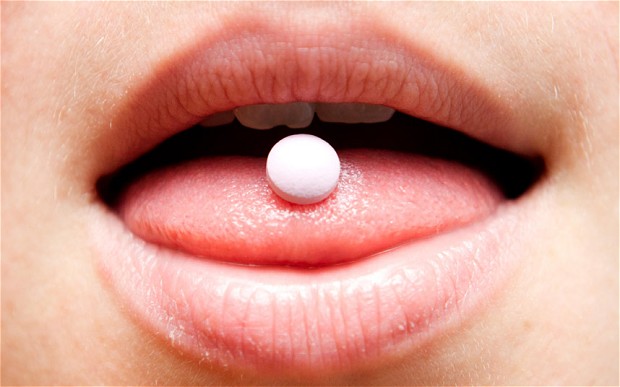
A US study has found being on the pill doesn’t make girls any more promiscuous – as some critics have suggested. Well, duh, says Daisy Buchanan, as she praises the NHS for always giving out free contraception

By Daisy Buchanan

Excellent news from the US! Apparently, the availability of free or affordable hormonal contraception does not turn women into insatiable succubi who, given the excuse and opportunity, will become promiscuous enough to make Anthony Weiner look like a giant panda. A study released in the Obstetrics And Gynaecology journal found that, over a year of birth control courtesy of ObamaCare, 70 per cent of women reported no change in the number of partners they slept with – and most of the 13 per cent of women sleeping with more people said it was because their numbers had ‘rocketed’ from zero to one.

You wouldn’t think the effects of contraception on promiscuity would even merit a study, but then you probably wouldn’t think it was OK to say that being on the pill makes a woman a slut – as Rush Limbaugh did before he apologised. Or imply, like Republican Mike Huckabee, that women who need financial help with contraception simply can’t control their sex drives.

When I was at school, being on the pill was a badge of honour – and dishonour. The girls with steady boyfriends who were rumoured to be ‘doing it’ but couldn’t be drawn on the subject could sometimes be tricked into revealing the details of their choice of hormonal contraception. Bags, lockers and pencil cases were regularly searched for sexy evidence. Anyone who asked any suspiciously attentive questions in biology class was suspected.

Of course, some poor girls were on it just to regulate heavy periods, but we wouldn’t listen to the boring, practical truth. As far as we were concerned, if you were on the pill, you were a slut, and we whispered about you and judged you. The obvious feeling we failed to articulate was jealousy. The girls on the pill seemed thrillingly adult, and we knew we weren’t cool enough for their world, so we excluded them from ours.

Of course, after a couple of years, everyone was on the pill, or the implant, or the coil, or, for the adventurous, the Nuva ring. Using hormonal contraception doesn’t make me feel like an edgy rebel – but having just renewed my Nexplanon implant for the fourth time, I feel full of thankfulness for the NHS, who make the procedure easy as well as free. Giving women autonomy over their bodies and allowing them to choose to start a family if and when they’re ready is one of the most enlightened, progressive things any country can provide for its ladies. Sadly, we know that we have sisters all over the world who don’t have so many straightforward options.

In the States, Planned Parenthood clinics are being shut down at a record rate. This is partly due to direct pressure from anti-abortion activists, and partly down to a lack of funding – although the centres provide contraception as well as abortion advice and services, they are targeted by pro-life activists. As the NHS faces drastic budget cuts, I fear our sexual health clinics could be under threat too.

The recent, chilling story from Wonder Women about unregulated crisis centres giving women inaccurate abortion advice is a reminder that our right to judgement-free family planning is one that’s definitely worth protecting. Pregnancy should be a joyful life event, and not a biological punishment for having sex, and daring to enjoy your body in an independent way.

Being on the pill doesn’t make anyone a slut. It does demonstrate that you’re responsible enough to plan ahead, work out what your priorities are and focus on your education, career or any one of the hundreds of other important things you might want to do before, or instead of having a child. The pill doesn’t just give women the freedom to have sex without experiencing an unwanted pregnancy. It allows them a life that would not have been possible at the start of the last century.

Daisy Buchanan is a freelance journalist who can be found tweeting @NotRollerGirl


Sex is not just for younger women, new scientific study shows

Sex is not just for younger women, new scientific study shows

New research suggests middle-aged women who are sexually active are likely to carry on having sex for decades after, suggesting many women do not lose interest in sex as they get older

Middle-aged woman who are sexually active are likely to keep on having sex as they grow older, even if they were diagnosed with sexual dysfunction, new research shows.

A team of researchers based at the University of Pittsburgh Medical Center recruited 602 women between the ages of 40 and 65 and asked them to report if they were sexually active, and how important they felt sex was in their lives.

“There’s this popular public perception that as women age, sex becomes unimportant, and that women just stop having sex as they get older,” lead author Dr. Holly Thomas said.

“From our study, it looks like most women continue to have sex during midlife,” she said.

“It may be detrimental to label a woman as sexually dysfunctional,” added Dr Thomas.

Psychologists and doctors have been debating the value of diagnosing women with sexual dysfunction since the release of Viagra triggered a search for a female version of the drug.

Doctors use a test called the Female Sexual Function Index to diagnose women’s sexual problems. The index includes 19 questions about arousal, orgasm, vaginal lubrication and pain during intercourse.

In the current study, 354 middle-aged and older women who reported being sexually active when they first took the test took it again four years later.

More than 85 percent of women reported that they remained sexually active when they took the test the second time between the ages of 48 and 73.

Nevertheless, those women generally scored low on the sexual-function index, with an average score of 22.3 – below the cutoff of 26.55 considered sexually dysfunctional.

The authors were surprised to find that sexual function, as measured by the index, failed to predict whether the women continued to have sex.

They theorized that the instrument “may be labeling women as dysfunctional when women don’t have a problem,” Thomas said.

The index’s “focus on intercourse may not accurately reflect what constitutes satisfying sex in this population, yielding falsely low scores,” she and her colleagues write.

Race, weight, relationship status and how important women deemed sex – rather than their scores on the sexual-function index – were the most important predictors of sexual activity, according to findings published in JAMA Internal Medicine.

Women who rated sex as important were three times as likely to remain sexually active as women who rated it as unimportant, Thomas said.

Abortion: A pregnant woman’s right to choose – free of any pressure

Abortion: A pregnant woman’s right to choose – free of any pressure

I unreservedly support a woman’s right to terminate her pregnancy, and I have no moral issue with abortion. But it’s precisely because I support a woman’s right to choose that I feel uncomfortable about the way that abortion services are run.

There can be few medical procedures so politically charged as abortion. Simply uttering the term polarises people. Battle lines are drawn and there is an expectation that you will join one camp or the other. For or against, pro-life or pro-choice: the narrative rarely extends beyond this simple dichotomy. And, if you are pro-choice, any criticism of abortion is considered a heresy.

I unreservedly support a woman’s right to terminate her pregnancy, and I have no moral issue with abortion. But it’s precisely because I support a woman’s right to choose that I feel uncomfortable about the way that abortion services are run. That there is a financial incentive for pregnancy advisory services to undertake terminations is plain wrong. It is fair to ask, how can they offer independent advice when so much of their income comes from terminations?

Many women seeking advice are scared, upset and vulnerable. While doctors would argue that they remain impartial in the advice they give, research suggests that, although many think they are impartial, in fact they can be easily swayed by subtle external pressures. Why do we think it will be any different with abortion?

It’s not just that women might be swayed into having a termination. The opposite is also true.

Crisis Pregnancy Centres are a group of unregulated outlets across the UK that promote themselves as advisory services for women trying to deal with an unplanned or unwanted pregnancy. While some may claim to be impartial, others are run by pro-life charities. These centres are not regulated by the Department of Health, yet claim to give out reliable health advice.

Worryingly, investigations by this newspaper have shown that the information they share about the physical and mental effects of an abortion is often not supported by medical evidence or in line with official advice from the Royal College of Obstetricians.

What an unforgivable mess. Where are the voices from women’s groups condemning this whole set-up? Where were the feminists after this newspaper also uncovered doctors who were willing to terminate pregnancies for women who did not want to have a baby girl? A few muted whimpers – but nothing more.

Last month, another investigation suggested that the practice has become so widespread within some communities that it is said to have led to the “disappearance” of between 1,400 and 4,700 females. Why aren’t men and women who consider themselves supporters of women’s rights up in arms about this?

What was exposed is pure misogyny, and yet, because it relates to abortion, ideological confusion creeps in. Why can’t you criticise the way abortion services are run while still supporting a woman’s right to choose?

For me, this is a clear example of how farming out services from the NHS to independent providers can go cataclysmically wrong. The entirety of pregnancy advice should be brought back into the NHS, where strict guidelines on impartiality can be enforced and there is no financial incentive for individuals to recommend one decision over another.

I’m pro-choice – and I want things to change to ensure that that choice really is the woman’s.

Why hitting 50 has never been more fun

Why hitting 50 has never been more fun

Apparently, we all now want to charge over the top into our 50s – and no wonder

By 

How tremendously cheering to learn that women in their 50s are happier, more self assured and more confident than their younger, and generally-speaking firmer counterparts.

Yay! I’m not there yet (not for decades, as my youngest, bless her Hello Kitty socks really does believe I’m 29) but it’s always good to know the lay of the land before heading blindly over the top.

Apparently one reason why ladies d’un certain age feel so darn good about themselves is that they have stopped fretting about their bodies, which presumably frees up more headspace for improving literature and spa breaks and learning circus skills.

And about time too. There’s not a mature woman alive who hasn’t looked at a photo of themselves aged 22 and winsome or 35 and poised or 48 and magnificent and wondered why on earth they frittered so much energy worrying about their thighs and lurching miserably from one insane cabbage soup or high protein or low self-esteem diet to another, when they were perfectly gorgeous they way they were.

I’m not mocking. Not at all. Mea culpa; it’s the agony and the ecstasy of being a woman in a society where we are judged – and, even more exactingly, judge ourselves – on our looks.

It was Bette Davis who acidly remarked that “getting old is not for sissies”, but I would suggest being young isn’t always a walk in the park either.

Youth is precious and fleeting and fabulous. But try telling that to the average 20-something crippled with insecurity and self-doubt.

If we’d known then what we know now, we’d all have taken more chances, or fewer chances or different ones at any rate and had given ourselves a break and loved our bottoms a bit more not sweated the small stuff, endlessly.

But hey, that’s the upside of growing older. And if the trade-off for wisdom and the sense of who-gives-a-fig freedom is a less than pert derriere or a few extra laughter lines, well ladies, it’s a price well worth paying.

Left-Handed People Have Better Sex, Study Finds

Left-Handed People Have Better Sex, Study Finds

2014-04-04

Samantha Grossman @sam_grossman

We foresee a line of “Lefties do it better” t-shirts debuting soon

Life can be pretty tough for left-handed people. For example, they can’t use those those university classroomdesks and they struggle with everyday devices like can openers.

Apparently, though, left-handed people ultimately prevail over their right-handed counterparts because they have better sex.

According to a recent survey, lefties are 71% more satisfied in the sack than righties.

Of the 10,000 people surveyed, 86% of left-handed people reported being “Extremely Satisfied” with their sex lives, compared to just 15% of righties. Just 15%! Too bad, so sad.

It’s hard to say exactly why lefties are more fulfilled, but we assume it’s because while righties are off doing things that are engineered for righties — like using desks or playing video games or opening cans — lefties are off perfecting other skills.

When Popularity Backfires: Climbing the Social Ladder Can Lead to Bullying

When Popularity Backfires: Climbing the Social Ladder Can Lead to Bullying

2014-04-03

Alice Park

Kids who gain the most status middle and high school are targets of a lesser-known pattern of aggression

There are certain truths that we have come to accept about the social hierarchy in middle and high schools – the popular kids rule the halls, while the less conventional ones, who dress, think or act differently, are marginalized at the bottom. And indeed, studies have documented how most of the victims of bullying are those who occupy the lower rungs of the social ladder — in 2011, nearly 30% of students aged 12 years to 18 years reported being bullied, either in school or via the internet, according to the National Center for Education Statistics.

But a new study suggests that social outcasts aren’t the only targets of bullying and aggression, and that increasing one’s social status can lead to being ostracized, teased, and threatened. “This second pattern of aggression is among kids who are relatively popular targeting their rivals, and this tends to escalate until they climb to the very top rung of the social ladder,” says Robert Faris, associate professor of sociology at the University of California Davis.

Faris was interested in understanding bullying at a deeper level, to identify “hotspots” of conflict and aggression in school-based hierarchies. He and his colleague Diane Felmlee, professor of sociology at Pennsylvania State University, investigated whether there were other reasons for students’ aggression toward one another, such as using it as a tool for social climbing.

Their results, published in American Sociological Review, suggest that kids get bullied not only when they don’t fit in, but also when they are simply trying to avoid being victims by moving up the social ladder. “As social status increases, the involvement in aggression–both as perpetrator and now as victims–also tends to go up until they get to the very top, when things start to reverse,” says Faris.

To detect this phenomenon, Faris and his co-author Diane Felmlee, professor of sociology at Pennsylvania State University, studied more than 4,200 students in eighth, ninth, and tenth grades during the 2004 to 2005 school year. In the fall, at the beginning of school year, they asked the students to record their five closest friendships. With that information, the researchers created a social map resembling a bird’s nest. Those with the shortest paths to the most students were given higher ranks on the social status scale. This exercise was repeated in the spring of the same academic year so Faris could compare changes in status against students’ reports of being victimized, which included verbal insults, physical aggression, being the target of damaging rumors, and continued and relentless harassment.

For both boys and girls who began the school year in the 50thpercentile, for example, but moved to the 95th percentile, the chances that they were targeted for some type of aggression increased by 25% compared to those who remained in the 50th percentile.

The students also answered questions about their anxiety, depression, anger, attachment to the school, and how socially central they felt in the school network. Not only were the socially mobile and relatively more popular students victimized more than the socially stable teens, they were also more sensitive to the effects of bullying. They reported higher rates of anxiety, depression, and anger, and lower rates of feeling central to their social group. Faris suspects that may result from the fact that these students have invested more time and self-esteem in their social status, and feel they have more to lose if they are ostracized.

Girls were disproportionately the target of this alternate type of bullying. The highest rates of such aggression occurred between girls, and boys were also more likely to target girls who were moving up socially than boys who were doing the same.

“One of the things we hope to call attention to is the group of people whom we don’t often think of as being bullied,” says Faris. While much of the aggression may not fit the classic definition of bullying, the verbal taunting and the ostracizing, both in the real world and online through social media, can have devastating consequences. And understanding that its victims may not always fit the commonly accepted criteria of outcasts who don’t fulfill social norms can lead to more effective ways of recognizing and even reducing bullying behavior – of all types – in schools.

How to Raise Happy Kids: 10 Steps Backed by Science

How to Raise Happy Kids: 10 Steps Backed by Science

2014-03-31

Eric Barker-When you ask parents what they want for their kids, what’s usually the most common reply? They want their children to be happy.

the well-being of children is more important to adults than just about anything else–health care, the well-being of seniors, the cost of living, terrorism, and the war in Iraq. More than two-thirds of adults say they are “extremely concerned” about the well-being of children, and this concern cuts across gender, income, ethnicity, age, and political affiliation.

Now there’s tons of info on raising smart kidsand successful kids, but how do you raise happykids?

Sometimes it’s hard to balance what’s best for children with what makes them happy — but the two don’t have to be mutually exclusive.

Happier kids are more likely to turn into successful, accomplished adults.

…happiness is a tremendous advantage in a world that emphasizes performance. On average, happy people are more successful than unhappy people at both work and love. They get better performance reviews, have more prestigious jobs, and earn higher salaries. They are more likely to get married, and once married, they are more satisfied with their marriage.

So looking at the science, what really works when it comes to raising happy kids?

Step 1: Get Happy Yourself

The first step to happier kids is, ironically, a little bit selfish.

How happy you are affects how happy and successful your kids are — dramatically.

Extensive research has established a substantial link between mothers who feel depressed and “negative outcomes” in their children, such as acting out and other behavior problems. Parental depression actually seems to cause behavioral problems in kids; it also makes our parenting less effective.

And this is not merely due to genetics.

…although the study did find that happy parents are statistically more likely to have happy children, it couldn’t find any genetic component.

So what’s the first step to being a happier you? Take some time each week to have fun with friends.

Because laughter is contagious, hang out with friends or family members who are likely to be laughing themselves. Their laughter will get you laughing too, although it doesn’t even need to in order to lighten your mood. Neuroscientists believe that hearing another person laugh triggers mirror neurons in a region of the brain that makes listeners feel as though they are actually laughing themselves.

Step 2: Teach Them To Build Relationships

Nobody denies learning about relationships is important — but how many parents actually spend the time to teach kids how to relate to others?

(Just saying “Hey, knock it off” when kids don’t get along really doesn’t go far in building essential people skills.)

It doesn’t take a lot. It can start with encouraging kids to perform small acts of kindness to build empathy.

This not only builds essential skills and makes your kids better people, research shows over the long haul it makes them happier.

Multiple sclerosis (MS) patients who were trained to provide compassionate, unconditional positive regard for other MS sufferers through monthly fifteen-minute telephone calls “showed pronounced improvement in self-confidence, self-esteem, depression, and role functioning” over two years. These helpers were especially protected against depression and anxiety.

Step 3: Expect Effort, Not Perfection

Note to perfectionist helicopter parents and Tiger Moms: cool it.

Relentlessly banging the achievement drum messes kids up.

Parents who overemphasize achievement are more likely to have kids with high levels of depression, anxiety, and substance abuse compared to other kids.

The research is very consistent: Praise effort, not natural ability.

The majority of the kids praised for their intelligence wanted the easier puzzle; they weren’t going to risk making a mistake and losing their status as “smart.” On the other hand, more than 90 percent of growth mind-set-encouraged kids chose a harder puzzle.

Why? Dweck explains: “When we praise children for the effort and hard work that leads to achievement, they want to keep engaging in that process. They are not diverted from the task of learning by a concern with how smart they might — or might not — look.”

Step 4: Teach Optimism

Want to avoid dealing with a surly teenager? Then teach those pre-teens to look on the bright side.

Ten-year-olds who are taught how to think and interpret the world optimistically are half as prone to depression when they later go through puberty.

Author Christine Carter puts it simply: “Optimism is so closely related to happiness that the two can practically be equated.”

She compares optimists to pessimists and finds optimists:

  1. Are more successful at school, work and athletics
  2. Are healthier and live longer
  3. End up more satisfied with their marriages
  4. Are less likely to deal with depression and anxiety

Step 5: Teach Emotional Intelligence

Emotional intelligence is a skill, not an inborn trait.

Thinking kids will just “naturally” come to understand their own emotions (let alone those of others) doesn’t set them up for success.

A simple first step here is to “Empathize, Label and Validate” when they’re struggling with anger or frustration.

Molly: “I am SO SO SO MAD AT YOU.”

Me: “You are mad at me, very mad at me. Tell me about that. Are you also feeling disappointed because I won’t let you have a playdate right now?”

Molly: “YES!! I want to have a playdate right NOW.”

Me: “You seem sad.” (Crawling into my lap, Molly whimpers a little and rests her head on my shoulder.)

Relate to the child, help them identify what they are feeling and let them know that those feelings are okay (even though bad behavior might not be).

Step 6: Form Happiness Habits

We’re on step 6 and it might seem like this is already a lot to remember for you — let alone for a child. We can overcome that withgood habits.

Thinking through these methods is taxing but acting habitually is easy, once habits have been established.

How do you help kids build lasting happiness habits? Carter explains a few powerful methods backed by research:

  1. Stimulus removal: Get distractions and temptations out of the way.
  2. Make It Public: Establish goals to increase social support — and social pressure.
  3. One Goal At A Time: Too many goals overwhelms willpower, especially for kids. Solidify one habit before adding another.
  4. Keep At It: Don’t expect perfection immediately. It takes time. There will be relapses. That’s normal. Keep reinforcing.

Step 7: Teach Self-Discipline

Self-discipline in kids is more predictive of future success than intelligence — or most anything else, for that matter.

Yes, it’s that famous marshmallow test all over again. Kids who better resisted temptation went on to much better lives years later and were happier.

…preschoolers’ ability to delay gratification–to wait for that second marshmallow–predicts intelligence, school success, and social skills in adolescence. This is at least in part because self-discipline facilitates learning and information processing. In addition, self-disciplined kids cope better with frustration and stress and tend to have a greater sense of social responsibility. In other words, self-discipline leads not just to school success and sitting nicely at the dinner table but to greater happiness, more friends and increased community engagement.

What’s a good way to start teaching self-discipline? Help kids learn to distract themselves from temptation.

One way to do it is to obscure the temptation–to physically cover up the tempting marshmallow. When a reward is covered up, 75 percent of kids in one study were able to wait a full fifteen minutes for the second marshmallow; none of the kids was able to wait this long when the reward was visible.

Step 8: More Playtime

We read a lot about mindfulness and meditation these days — and both are quite powerful.

Getting kids to do them regularly however can be quite a challenge. What works almost as well?

More playtime.

Most kids already practice mindfulness — fully enjoying the present moment — when they play. but kids today spend less time playing both indoors and out… All told, over the last two decades, children have lost eight hours per week of free, unstructured, and spontaneous play…

Playtime isn’t just goofing off. It’s essential to helping kids grow and learn.

Researchers believe that this dramatic drop in unstructured playtime is in part responsible for slowing kids cognitive and emotional development… In addition to helping kids learn to self-regulate, child-led, unstructured play (with or without adults) promoted intellectual, physical, social, and emotional well-being. Unstructured play helps children learn how to work in groups, to share, negotiate, resolve conflicts, regulate their emotions and behavior, and speak up for themselves.

No strict instructions are necessary here: Budget more time for your kids to just get outside and simply play.

Step 9: Rig Their Environment For Happiness

We don’t like to admit it, but we’re all very much influenced by our environment – often more than we realize.

Your efforts will be constrained by time and effort, while context affects us (and children) constantly.

What’s a simple way to better control a child’s surroundings and let your deliberate happiness efforts have maximum effect?

Less TV.

…research demonstrates a strong link between happiness and not watching television. Sociologists show that happier people tend to watch considerably less television than unhappy people. We don’t know whether TV makes people unhappy, or if already unhappy people watch more TV. But we do know that there are a lot of activities that will help our kids develop into happy, well-adjusted individuals. If our kids are watching TV, they aren’t doing those things that could be making them happier in the long run.

Step 10: Eat Dinner Together

Sometimes all science does is validate those things our grandparents knew all along. Yes, family dinner matters.

This simple tradition helps mold better kids and makes them happier too.

Studies show that kids who eat dinner with their families on a regular basis are more emotionally stable and less likely to abuse drugs and alcohol. They got better grades. they have fewer depressive symptoms, particularly among adolescent girls. And they are less likely to become obese or have an eating disorder. Family dinners even trump reading to your kids in terms of preparing them for school. And these associations hold even after researchers control for family connectedness…

Sum Up

Here are the ten steps:

  1. Get Happy Yourself
  2. Teach Them To Build Relationships
  3. Expect Effort, Not Perfection
  4. Teach Optimism
  5. Teach Emotional Intelligence
  6. Form Happiness Habits
  7. Teach Self-Discipline
  8. More Playtime
  9. Rig Their Environment For Happiness
  10. Eat Dinner Together

We’re often more open to new methods when it comes to work and careers, but ignoring tips when it comes to family is a mistake.

The most important work you and I will ever do will be within the walls of our own homes.

– Harold B. Lee

I hope this post helps your family be happier.

How dangerous is sleep deprivation, really?

How dangerous is sleep deprivation, really?

2014-03-12

By Alia Hoyt, upwave.com

(upwave.com) — Everyone has a night here or there where sufficient sleep just doesn’t happen. (Just ask anyone who’s ever been to Vegas… or cared for a newborn.) But a lot of people miss out on getting significant shut-eye on a regular basis. In fact, aboutone in five American adults are sleep deprived.

The rumor: Sleep deprivation is harmful and can even be life-threatening

If you’ve ever come close to nodding off in the boardroom or behind the wheel, you know that the effects of sleep deprivation can range from embarrassing to downright terrifying. But are we really putting ourselves and others at risk, however inadvertently? And if we are sleep deprived, how do we fix it?

The verdict: Sleep deprivation really is dangerous for your body and mind

I hate to break it to you, but sleep deprivation really can be life-threatening.

“Sleep deprivation is the single most dangerous aspect of any sleep disorder, because you have no idea that you are compromised cognitively, physically and emotionally,” says sleep expert and upwave reviewer Michael Breus.

Sleep deprivation affects three distinct areas of life. The first, and probably most life-threatening, is reaction time. People who operate heavy equipment or drive any kind of vehicle are likely to have dulled reaction times when sleep-deprived, making them more prone to accidents. In fact, recent research has found drowsy driving to be just as risky as drunk driving. So you might want to think twice before staying up late to catch the end of that football game.

Cognition — how we think, retain memories, process information and make decisions — is also negatively impacted by sleep deprivation. “It’s easy to miss a fine detail when sleep-deprived,” explains Breus. “We often don’t put information together correctly.” This may not seem like a big deal… until you mess up that major report for your boss, or forget what time your flight home is!

Emotions are also greatly heightened by lack of quality sleep, says Breus. Everything from anger to sadness to frustration all get blown out of proportion, making a potentially bad situation that much worse.

So, what can you do to fix the problem? Well, you could just try going to bed earlier. But a late bedtime is hardly the only cause of sleep deprivation. Others include stress, environmental factors (a snoring spouse; an excessively warm bedroom) and poor diet (heartburn; excessive alcohol; too much caffeine).

Also, there’s no one “ideal” amount of sleep. Some people function just fine on seven hours, whereas others (like me) need a heftier nine. “The minimum number of hours is six,” says Breus. “Anything less is, in all likelihood, sleep deprivation.”

To identify your ideal time for lights-out, Breus suggests counting backwards about seven and a half hours from your required wake-up time. “If you wake up five minutes before your alarm goes off, you’ve nailed it,” he says. By the same token, if you rise feeling refreshed, you’re right on the money. If not, you’re probably sleep-deprived, which can lead to those cognitive, reaction and emotional issues we’ve discussed.

upwave: How to sleep 7.5 hours a night

I know that sleep often seems negotiable, but our bodies and minds really need the consistency of a quality night’s rest to prepare and reboot for the coming day.

So take an honest look at your sleep hygeine. Chances are, you can make a few changes to get more sleep. Of course, if problems persist, you may want to consult your doctor. We all need to be at our thinking, feeling and reactive best in order to thrive and stay safe. In most cases, a little extra shut-eye will get you there! Sleep tight!

This article was originally published on upwave.com.