All posts by SRH Matters

Deep-Voiced Men Make Bad Mates: Study

Deep-Voiced Men Make Bad Mates: Study

2013-10-22

By @youselessOct. 17, 2013

Smiling couple talking on bed in modern home

???

Men with deeper voices have an advantage in attracting women, but mostly if they’re looking for a fling, new research suggests.

Researchers at at McMaster University in Ontario, Canada have previously reported on the link between the depth of a guy’s voice and his attractiveness to women. They also figured that guys with lower voices, and hence probably more testosterone, were more likely to cheat (they were right). What they couldn’t work out was why women preferred the men who were probably going to be cads. So they went back to the audiotape.

In the new study — which may also provide some insight into why Isaac Hayes songs are forever a popular choice for the boudoir — researchers had women listen to men’s voices and asked them first if they thought the speaker was a faithful sort of guy. Then they were asked if they fancied the owner of the voice for a long or short-term relationship. The deep-voiced men were chosen more often for short term relationships, but mostly by certain sorts of women—those who had already expressed a belief that a bass voice often led to fishy behavior.

“Differences in the strength of women’s preferences were accounted for by whether or not they thought the voices belonged to a cheater,” says Jillian O’Connor, a postdoctoral fellow in the Department of Psychology, Neuroscience and Behaviour at McMaster, who was this study’s (and the prior one’s)  lead author. “Women who thought that men with lower pitched voices were cheaters liked them for short-term flings.”  The scientists defined “short-term relationship” more towards the one-night-stand than the May to December fling.

The women who didn’t associate a deep pitch with infidelity tended to prefer those guys for long term relationships. The authors surmised that some women have come to adaptively understand that more macho guys are more likely to cheat — and have thus learned to avoid macho-sounding guys for serious life partnering.

For deep-voiced males, fear not. The study was pretty small, just 87 women, and it didn’t use actual tones. The voices the women heard came from the same guy with his pitch digitally deepened or heightened. Which means the findings probably aren’t conclusive enough to cross off any baritones from anybody’s list of eligible bachelors, even if biology were destiny.

Study: Predicting Whether a Partner Will Cheat Could Be Gender-Specific

The lure for a deep voice for females may have something to do with the woman’s biology too. “Some of my other research has found that women who have more attractive faces have stronger preferences for lower pitched men’s voices,” says O’Connor. “But that was not examined in this study.” Looks like men are not the only ones who respond to siren songs.

Study: Breast Milk Sold Online Can Get Your Baby Sick

Study: Breast Milk Sold Online Can Get Your Baby Sick

Donated or sold breast milk contains bacteria and sometimes salmonella

By Eliana Dockterman @edocktermanOct. 21, 2013

bm

A small marketplace for breast milk has sprouted online, but a study published Monday confirms what health professionals suspected: Internet breast milk is often tainted.

The study, published in Journal of Pediatrics, found that breast milk donated or sold on two popular websites was often contaminated with high levels of bacteria that could make a child sick, including salmonella. Sixty-four percent of the samples were contaminated with staph, 36 percent with strep and almost 74 percent had so much bacteria that they would have failed the Human Milk Banking Association’s criteria, the Associated Press reports.

Recent research has found that breast milk protects infants from infections, so doctors have been encouraging new mothers to breast-feed rather than use formula. But not all women can do so — couples who have adopted, mothers who have mastectomies and women who simply cannot produce enough milk are forced to rely on donated or purchased breast milk.

Some turn to breast milk banks, where the Human Milk Banking Association screens donors. But banks prioritize premature infants with medical complications, and do not hold enough milk for healthy infants whose mothers simply cannot lactate.

In 2011, there were more than 13,000 postings on the four leading milk-sharing sites, the AP reports.

Reproductive Medicine’s Gift: 5 Million Babies

Reproductive Medicine’s Gift: 5 Million Babies

2013-10-21

Methods like IVF have brought 2.5 million babies into the world in the last six years alone

babies1

About 5 million babies have been born with the help of advanced reproductive medicine since 1978, a medical group said Tuesday.

The International Committee for the Monitoring of Assisted Reproductive Technology, which represents fertility groups, unveiled the estimate at a reproductive medicine meeting in Boston. So-called Assisted Reproductive Technology (ART) includes fertility treatments like in vitro fertilization, among others.

“The number of babies born through ART is now about the same as the population of a U.S. state such as Colorado, or a country such as Lebanon or Ireland,” Richard Kennedy, a committee board member, said in a statement. “This is a great medical success story.”

According to group’s calculations, the number of ART babies grew rapidly over the last few decades. By 1990, there had been an estimated 90,000 births worldwide with the help of ART; by 2000, 900,000 births; and by 2007, 2.5 million births.

More than half of the 5 million ART babies were born in the last six years.

Don’t Let Them Smell You Sweat: You’ll Seem Untrustworthy

Don’t Let Them Smell You Sweat: You’ll Seem Untrustworthy

2013-10-14

By


Urghhh, bad smell.
Urghhh, bad smell.

There’s a reason why you should never let ‘em see — or smell — you sweat. You appear not just less confident, but less competent and less trustworthy as well.

It’s not exactly a revelation, but it is sobering — women are judged differently based on their sweat, according to a new study published in PLOS ONE. Experts in the field of perspiration have broken sweat down into three types: sweat from exercise, sweat in response to heat, and sweat from stress. Each is driven by a slightly different body process — exercise and heat sweat come from the body’s eccrine glands, which pump out clear, odorless water on the surface of the skin that is tinged with a bit of salt (these are the glands responsible for damp foreheads and clammy palms and feet). Stress sweat, however, comes from the more hirsute regions of the body — think scalp, armpits and groin — and is saturated with fats. Those aren’t odoriferous per se, but they serve as food for the bacteria that blanket the skin, and it’s those bugs that emit the hallmark BO signalling sweat under pressure.

And according to scientists from Monell Chemical Senses Center, that odor also affects how people perceive the sweatee. While previous work suggested that people changed their emotional reactions toward others based on their odor, the latest study found that people may also judge others on their compatibility and trustworthiness according to their scent.

The researchers asked 44 female participants to provide samples of underarm sweat at the start of the study, and under three different conditions — after exercising on a stationary bike for 15 minutes, after stressful events that the scientists created, and after the same stressful events but treated with an antiperspirant. The anxiety-producing exercises included preparing a speech for five minutes, doing mental math problems for five minutes, and five minutes of public speaking. Secret provided its Clinical Strength antiperspirant and funded the study, but did not influence its design or data, according to the scientific team.

The researchers then asked 120 male and female volunteers to smell the various sweat samples while watching videos of the women who provided the samples as they went about their daily duties at home, in the office or in a childcare setting. The evaluators rated the women they saw on how stressed or confident they appeared. Those who smelled samples of untreated stress sweat were significantly more likely to say the women to whom the samples belonged were more stressed than those who smelled the treated sweat. What’s more, men were more likely to see the stress-sweating women as less confident, trustworthy and competent when they were asked about those characteristics.

Although the researchers only looked at women for this study, the authors say that prior research showed that inhaling the body odors from men under stress also induced anxiety in female subjects.

The scientists say this is the first study to link sweat odor to social perceptions, so it’s too early to say whether perspiration odor in all societies would have the same effect on trust and competence measures. The American culture places a premium on smelling fresh and on masking body odors, but other societies may not place as much value on hiding natural emanations. So in the U.S., the results could be a boon not just for deodorant and antiperspirant manufacturers, but for video conferencing ventures as well. The next time you’re nervous about a speech or a presentation, you might consider finding ways to not let them smell you sweat.

Transgender Showed Evolutionary Benefits in Ancestral Societies

Transgender Showed Evolutionary Benefits in Ancestral Societies

2013-10-09

By


Close-up of a couple holding hands in field

A new paper published in the journal Human Nature finds that transgendered men were often seen as an asset in some societies.

Among hunter-gatherer communities, the social investments that transgender males made to their groups may have helped to sustain the transgender orientation into modern societies, say researchers led by Doug VanderLaan of the Centre for Addiction and Mental Health in Canada.

VanderLaan and his colleagues studied 146 non-transgendered societies and 46 transgender societies in both current and older hunter-gatherer societies, and found that transgender men were considered useful to their communities as extra help in supporting the family, whether by maintaining households or by contributing to the raising of children. Those benefits provided an evolutionary advantage to the societies in which they belonged, allowing them to survive and remain healthy, and that in turn provided the opportunity for transgender attributes to continue into future generations, despite the fact that many transgender males did not have biological children of their own. Not surprisingly, this effect was strongest in communities in which both male and female contributions to the health of a family — in the form of emotional, social as well as financial and political support — were considered equally important. In these communities, discrimination against homosexual activity was rare, the authors report.

In fact, that condition was critical to the positive societal contributions of the transgender males. In order for the contributions of these men to benefit the community, they had to be accepted by its members. And that remains true today — people who identify as transgender, or with any other sexual orientation for that matter, become most productive if they can contribute their time and energy to a community that accepts and welcomes their support.

Social Attitudes About Sexual Orientation May Not Be As Open As Previously Thought

Social Attitudes About Sexual Orientation May Not Be As Open As Previously Thought

By


Back of woman in t-shirt in 2008 Gay and Lesbian Pride Parade in Toronto, Canada

We like to think we’re a progressive society that is accepting of all sexual orientations, but the latest survey shows anti-gay sentiment is higher than we think, and current methods for assessing attitudes about sexuality are not as accurate as they should be.

In a study published in the National Bureau of Economic Research, scientists found that current methods may not accurately capture both the size of the lesbian, gay, bisexual and transgender (LGBT) population as well as attitudes toward them.

Overall, it’s hard to measure sexual orientation and opinions about sexual orientation because of persistent biases toward more socially acceptable responses. Researchers have found this trend even in computer-generated surveys where responses are anonymous.

So a team from Ohio State University and Boston University compared these survey techniques to another strategy that provided even more privacy and anonymity to participants, by guaranteeing that even the researchers could not connect the volunteers to their answers. Among the 2,516 U.S. volunteers who were randomly assigned to answer questions about their sexuality using one or the other survey method, those taking the more veiled survey were 65% more likely to report a non-heterosexual identity themselves and 59% more likely to report having a same-sex sexual experience than those using the standard survey technique.

The veiled method also revealed more people with anti-gay sentiment than among those taking the other type of survey. The participants were 67% more likely to disapprove of an openly gay manager at work and 71% more likely to admit that it was acceptable to discriminate against people who are lesbians, gay or bisexual.

“Comparing the two methods shows sexuality-related questions receive biased responses even under current best practices, and, for many questions, the bias is substantial,” the authors write.

Did the enhanced anonymity lead to more truthful responses? The researchers aren’t sure, but previous studies revealed that when responses are blinded, people do tend to express attitudes and opinions that are more raw and closer to their true beliefs. The scientists also can’t explain why those who were questioned under the more veiled technique were more likely to admit to both non-heterosexual orientation or experiences as well as more bias against them. While they suspect the two trends are independent of each other, it’s possible that the results also reveal something deeper about sexuality and social acceptance — or lack thereof — of LGBT identities.

The last word on hormone therapy?

The last word on hormone therapy?

2013-10-07


ht

When Janice hit menopause, she had terrible night sweats and hot flashes, but she was scared to undergo hormone replacement therapy.

Janice (who asked that her full name not be used for privacy reasons) had heard this treatment might be dangerous to her heart, and worried about risking her health.

It’s a concern many women have shared over the past decade since the benefits of hormone replacement therapy have been called into question. A large study called the Women’s Health Initiative (WHI) was instrumental in casting doubt on these hormones.

Tuesday, scientists from the WHI released what they say is the definitive study on the safety of hormone replacement therapy (HRT).  The bottom line: It’s OK for most healthy women who have just entered menopause to take hormones for a short period of time, but the researchers do not recommend it for long-term use. The results are published in this week’s Journal of the American Medical Association.

Background

Hormone replacement therapy is used to replace estrogen and other female hormones that are no longer produced after menopause. For decades, doctors thought HRT was good for women’s hearts and prescribed it, in part, to prevent heart disease.  About 40% of menopausal women used these hormones.

In the 1990s, more than 27,000 women were enrolled in a clinical trial through the WHI. Scientists wanted to find out if HRT really prevented heart disease and other chronic diseases.  But in 2002, a major part of the trial using two kinds of hormones (estrogen plus progestin) was suspended.  Researchers found some of the participants had serious health problems, including an increased risk of coronary heart disease, breast cancer and stroke. Two years later, the remainder of the clinical trial, involving women who had hysterectomies and were on only one hormone (estrogen), was also shut down due to health concerns.

When the WHI study was suspended, it received a lot of attention, both in the medical world and in the media. Many doctors stopped prescribing oral HRT.  Today only about 10% to 15% of menopausal women still take them, experts say.

The study

For this study, scientists looked back at 13 years of research on the WHI participants. The main message is: Most menopausal women should not use long-term hormone therapy for the purpose of preventing heart disease or other chronic diseases, says Dr. JoAnn Manson, one of the principal investigators of the WHI trial and Chief of Preventive Medicine at Brigham and Women’s Hospital in Boston, Massachusetts.

The WHI research found older women taking HRT are at a higher risk of blood clots, stroke and, in some cases, heart attacks.

But for most healthy women who are beginning menopause and suffering severe symptoms such as hot flashes and trouble sleeping, HRT can be a good option.

“It’s very likely that the quality of life benefits will outweigh the relatively small risk of having an adverse event,” Munson says.

However, Munson adds, women who have a history of heart disease or breast cancer may want to avoid HRT.

Some observers hope this study will put to rest the debate over HRT.  Over the years, some doctors have been critical of the way information from the WHI HRT trials has been interpreted.

“There are some risks and there are some benefits, but the risks in the grand scheme of things are not nearly as great as they have been portrayed,” said Dr. Holly Thacker, director of the Cleveland Clinic Center for Specialized Women’s Health in Cleveland, Ohio.

“Many of my patients still fear them, out of proportion to the data. This result helps put them into perspective once again and ought to be reassuring to women with average risk,” says Dr. Nanette Santoro, chair of the Department of Obstetrics and Gynecology at the University of Colorado in Aurora, Colorado.

About 15% to 20% of women in early menopause have moderate to severe symptoms and might benefit from taking HRT, according to Manson. Health care providers now often prescribe lower doses of oral HRT or potentially safer options such as the hormone patch, gels or vaginal creams.

For Janice, talking to her doctor put her mind at ease.

“My doctor explained the pros and cons of hormone therapy, assuring me that for me it was a good option,” says Janice. “My night sweats are pretty much gone.”

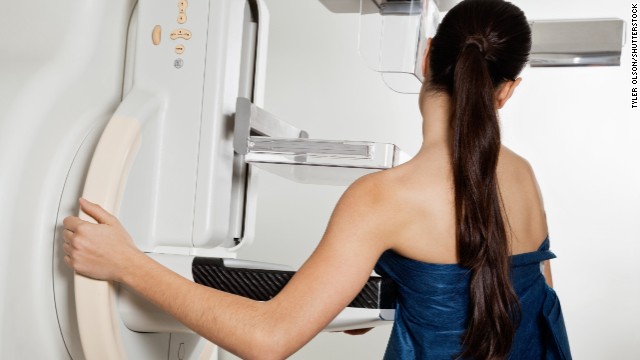
Breast cancer screening Qs answered

Breast cancer screening Qs answered

By Dr. Otis Brawley, CNN contributor

For years there has been much discussion about mammography screening. Several medical organizations have reviewed the scientific literature and made various recommendations — to begin screening at age 40, or to begin at age 50. Some recommended screening every year; others said every two years.

Since the 1960s, doctors and patients have believed that mammographic screening and early detection of breast cancer, combined with effective treatment, will save lives. There are now at least eight large clinical trials that definitively show screening saves lives for women aged 50 to 69.

Unfortunately, the data for women aged 40 to 49 are not as clear.

Because of that, confusion surrounds breast cancer screening. In honor of Breast Cancer Awareness Month, I decided to tackle some of the most common questions:

Why is mammography a better test for older women?

The answer is twofold: It is easier to see a cancer in mammograms of older women, and older women are more likely to have cancer.

When the radiologist reads a mammogram or X-ray of the breast, cancer appears white. Young breasts have more dense tissue compared to older breasts; a dense breast appears white on mammogram. So in younger women, the radiologist is looking for white on a white background.

The aging of the breast slowly turns its X-ray appearance from white to black. In the breast of a 60- or 70-year-old woman, the radiologist is looking for white on a black background. For women in their 40s, the background can range from whitish to grayish, depending on the density of the individual’s breasts.

A mass seen on a mammogram done on an older woman is also more likely to be cancer than one found in a younger woman. One in every 42 women will develop breast cancer in their 60s, compared to one in 28 women in their 50s. So a mass found in a younger woman may not have an effect on saving her life. In fact, it could do the opposite if unnecessary treatment is performed.

What are some of the limitations of mammography?

Mammography screening is not very effective in women between the ages of 20 and 40, and only moderately effective in women aged 40 to 49.

It is estimated through mathematical modeling that regular screening of a woman between ages 40 and 49 will decrease her risk of breast cancer death by about 15%. In comparison, clinical trials show that screening reduces risk of death by 20% to 35% in women aged 50 to 70.

It is estimated that 1,900 women will have to undergo an annual mammogram in order to save one life. A substantial number of these women (by some estimates more than half) will have an abnormal screen during that decade. These abnormal screens require additional testing and inconvenience. This, of course, also causes a lot of fear and worry. Most of those abnormalities will turn out to be clinically insignificant.

One harmful effect of screening women aged 40 to 49 is that some women have such a bad experience with callbacks for re-evaluation that they stop getting screened, and even refuse screening when they are in their 50s and 60s, when mammography is a more useful test.

Some organizations recommend screening every other year versus every year. There are data to suggest that every-two-year screening saves almost as many lives (about 85% to 90%) as every-year screening, but the number of false positives is halved.

What do the most respected organizations recommend?

While most American organizations recommend annual, high-quality screening beginning at age 40, a few recommend routine mammography start at age 50. Even these organizations say that women who are very concerned about breast cancer and want to start earlier can do so. The choice is yours.

But as you make that choice, know the limitations of mammographic screening.

It is a fact that high-quality breast screening will find some abnormalities that, after extensive evaluation, turn out not to be cancer. High-quality evaluation will miss some cancers. This is especially true in younger women, and can be true even in older women with denser breasts.

So should younger women get screened?

A small number of women will develop breast cancer before the age of 40. No organization recommends mammography for average-risk women under 40.

Women without a family history and with average risk should receive a clinical breast examination with their regular gynecologic examination. They should also be aware of their bodies and get medical assistance if they detect a change in their breast.

Those who have a family history of early breast cancers should consult a physician with expertise in breast cancer. Some of these women will be candidates for screening using magnetic resonance imaging.

The opinions expressed in this article are solely those of Dr. Otis Brawley.

How Eye Contact Can Backfire

How Eye Contact Can Backfire

2013-10-03

By

We’re often told to maintain eye contact when speaking with others. But a new study published in the journal Psychological Science is poking holes in the theory that looking deep into someone’s eyes shows interest and boosts persuasion.

In fact, the University of British Columbia researchers report that in the midst of an argument, looking the other person in the eye won’t get them to agree with you. It actually may do the opposite.

The researchers tested the power of eye contact by asking 20 study participants to share their opinions of controversial issues such as affirmative action and assisted suicide, and then watch a video of a speaker chatting about various topics. The researchers used eye-tracking technology to determine when the participants were maintaining eye contact.

When the speaker in the video spoke about opinions the participant shared, the participant maintained eye contact more consistently. But when the speaker started covering topics the participant disagreed with, they looked away.

The participants were less likely to change their opinions if they were looking into the eyes of the speaker, especially when the speaker was also looking directly at the participant, rather than to the side of the screen. To test this again, the researchers had the participants watch more videos, but sometimes they were told to look into the speaker’s eyes, and other times they were instructed to look at the speaker’s lips. The participants who looked into the speaker’s eyes were once again less likely to change their opinions compared to participants focusing on the speaker’s lips.

“There is a lot of cultural lore about the power of eye contact as an influence tool,” said lead researcher Frances Chen, an assistant professor at University of British Columbia, in a statement. ”But our findings show that direct eye contact makes skeptical listeners less likely to change their minds, not more, as previously believed.”

Exercise As Effective As Drugs For Treating Heart Disease, Diabetes

Exercise As Effective As Drugs For Treating Heart Disease, Diabetes

2013-10-02

By

Forget the pills — there’s new evidence that exercise may be as effective as medications in treating heart disease and diabetes.

Doctors now advise everyone, from young children to older adults, to become more physically active. It’s the best way to maintain a healthy weight, keep the heart muscle strong, and improve your mental outlook. But can exercise be as good as drugs in actually preventing disease and treating serious chronic illnesses?

That’s what researchers from the London School of Economics, Harvard Medical School and Stanford University School of Medicine wanted to find out. They compared the effect of exercise to that of drug therapy on four different health outcomes: heart disease, recovery from stroke, heart failure treatment and preventing diabetes.

The scientists pooled the results of 305 trials involving 339,274 people who were randomly assigned to either an exercise program or a drug-based therapy and found that there were no detectable differences between the two groups when it came to preventing diabetes and keeping additional events at bay for heart patients. And the physical activity was most powerful for participants who experienced a stroke. The only group that didn’t benefit from the exercise over drugs were patients with heart failure, likely because the strain of the physical activity wasn’t recommended for their condition.

The findings involving diabetes patients confirmed previous trials that documented how effective physical activity can be in bringing blood sugar levels down.

So why do most doctors prescribe drugs over exercise? There are more rigorous studies testing the effectiveness of drug therapies to treat common diseases, say the study authors, than there are studies that test the power of exercise. With these results, however, the researchers hope to see more work on how exercise can be a significant part of a treatment program for diseases ranging from heart problems to diabetes.

Those studies will need to analyze physical activity in the same way that drugs are studied, to determine how much exercise is needed to trigger beneficial changes in the body that can treat or prevent disease.

Currently, to maintain optimum health, federal experts recommend that people exercise at a moderate intensity for about 2.5 hours a week. But fewer than half of Americans meet that recommendation, and a third of Americans don’t get any exercise at all. The latest findings should encourage even those who aren’t active, however, since research shows even just talking a brisk walk can help lower the risk for high blood pressure, high cholesterol and diabetes, and be as powerful as medications in keeping the body healthy.