All posts by SRH Matters

How Implicit Bias Affects the Health of Black Gay Men

How Implicit Bias Affects the Health of Black Gay Men

2016-10-19

7 Things All Couples Should Know About His And Her Health

7 Things All Couples Should Know About His And Her Health

2016-10-18

800x400-his-and-her-health

Men and women are different in many ways, (Mars and Venus, anyone?) and there are heaps of scientific evidence to support this idea.

And obviously, each sex faces varying physiological and psychological challenges due to physical, hormonal and behavioral differences. While both sexes face some health problems at equally high rates, there are certain health conditions that affect one sex more than the other.

Men and women’s health-related differences extend to their sexual health as well. To get a better understanding of how men and women differ in their overall and sexual health, here are seven things you should know about each sex:

1. Women have a stronger immune system.

Some animal and human studies suggest that females from many species have a better advantage in the maintenance of health and, as a result, live longer.

For instance, a study out of the University of Sheffield by Jens Rolff suggests it makes sense that female biology invests in immunity, as women need to be healthy to carry offspring, while male biology is more about investing in mating success.


2. Depression and osteoporosis are not female diseases.

Although more women are diagnosed with both conditions than men, this discrepancy might be the result of men feeling less inclined to seek treatment for either condition.

This argument is especially true for depression, as women are culturally conditioned to talk about their feelings, while men are often encouraged to avoid such discussions.


3. Both men and women are at risk of heart attacks.

Women typically develop cardiovascular disease seven to 10 years later than men, mainly because estrogen protects against cardiovascular diseases, such as atherosclerosis. Nevertheless, after menopause, women reach the same risk rates for developing heart disease that men do.

While most research focused on cardiovascular disease being a risk factor for erectile dysfunction, there is growing evidence suggesting the same mechanism might be one of the major causes of female sexual dysfunction as well.


4. Women are more likely to have sexual problems.

According to an article from Current Psychiatry Reports, sexual dysfunction affects approximately 43 percent of women and 31 percent of men. Despite this fact, however, studies and treatments of sexual problems tend to focus more on men than on women.

The sexual problems that affect women are quite different from those affecting men, not only due to anatomical differences between the sexes, but probably due to psychological and cultural factors as well.


5. Men can develop pelvic floor problems as well.

Women of childbearing age are frequently recommended to practice Kegels to keep their pelvic floor muscles strong. This is not only beneficial for female sexual functioning, but for proper bladder control and bowel habits as well.

However, not many are aware of the benefits of Kegel exercises for men. The Journal of Sexual Medicine suggested proper sexual response and arousal, in both men and women, greatly depends on the functioning of this particular group of muscles.


6. Depression causes a decrease in sex drive for both sexes.

Depression is considered an “invisible” disease, with a rising number of people being diagnosed with the disorder. One of the many symptoms of depression is a diminished sex drive, alongside poor sexual functioning.

While women tend to experience symptoms like vaginal dryness, men may develop erectile dysfunction as a result of depression. To make matters even worse, antidepressants don’t help with sexual functioning. Rather, they only seem to contribute to a loss of sex drive in both men and women.


7. Male menopause might be a real thing.

We’re all aware of female menopause. Low serum estrogen levels are easy to test, and the cessation of menstruation is an obvious sign a woman is at the end of her reproductive age.

On the other hand, men can father children well into old age, and there’s no obvious sign a man is going through what is described as “male menopause” or even “andropause.”

Nevertheless, older men tend to experience symptoms similar to menopause and a decline in testosterone levels that researchers believe may be to blame for sexual dysfunction, loss of muscle, increasing fatigue, mental fog and other symptoms some men experience in mid-life.

5 Ways Exercise Can Improve Sexual Health, From Regulating Hormones To Improving Blood Flow

5 Ways Exercise Can Improve Sexual Health, From Regulating Hormones To Improving Blood Flow

Exercises have many health benefits. There are different types of exercises, each one with its own set of benefits. Studies have shown that those who frequently exercise have better stamina and level of satisfaction, which can lead to a boost in your sexual performance. There are various exercises that can boost your stamina, libido, and satisfaction.

People tend to be more sexually desireable the longer they can last in bed. Moreover, exercise could lead have a better libido, stamina, and better communication. Having a great sex life can improve your overall health, and great sex life can only be achieved when the couple finds each other hot in bed. In this article, you will learn about exercises, and how each one can make you more desireable in bed.

It can be embarrassing if you’re unable to satisfy your partner. One of the major reasons behind men not being able to satisfy their partners is because of erectile dysfunction . The statistics show that around 18 million Americans are suffering from erectile dysfunction. This should not worry you though because there are many solutions for solving your problem, and one of them is regular exercises. How can exercises make you hotter in bed? Let’s see how.

5 WAYS EXERCISE CAN IMPROVE YOUR SEX LIFE:

1. REGULATES HORMONE LEVELS

Regular exercises can boost your sex life. Both of you will start to release more endorphins, which enhances feelings of happiness . The level of fat carried by our body is directly related to the level of endorphins in the body. The more fat that’s released, the more endorphins and vice verse. The higher level of endorphins will in crease the sexual arousal in both men and women. Exercises will greatly help in maintaining your hormone level. More sexual arousal means being more active in bed.

2. GUARANTEED ORGASM

Sex is a physical activity, and it requires a lot of strength and stamina. Exercises will greatly increase your strength, stamina, and endurance. With more strength and stamina, it will open the possibility of experimenting with various sex positions. When you try various sex positions requiring a great level of physical control, it will lead to a guaranteed orgasm. All the varied sex positions and guaranteed orgasm will make you more desireable in bed.

3. ENHANCES BLOOD FLOW  

Exercises will enhance your blood pumping throughout your body. The blood circulation will be enhanced throughout your body, and it also includes in between of your legs. With more blood flow in genitals of women, it will lead to more vasocongestion. It will increase sensitivity, leading to more orgasm. In the case of a male, the increment in blood flow will lead to a stronger erection.

4. TIGHTER MUSCLES

Exercises will tighten your muscles, including pubococcygeus muscles (PC muscles). Your pelvic floor contraction (related with orgasm) will increase with a tighter PC muscle. It is better for you to try some pelvic floor exercises. There are many varieties of pelvic floor exercises to try. You can mix it with other exercises for a better sexual performance.

5. CONFIDENCE BOOST

Regular exercises will enhance your physical and mental health. Many studies have proven the positive impact of exercises on your health. Moreover, people doing regular exercises will have a positive attitude and less stress. When you have a positive attitude and less stress, you will explore more about your body, and you will have good communication with your partner too. It will also lead to increased orgasm, deeper bonding, and increased sex drive. This will make you feel more desireable because of greater sexual capacity.

CONCLUSION

Better sex life will improve your quality of life. After marriage, both partners want to have a great marital life. To have a great marital life, it is critical to have a better sex life. Having a bad sex life means always living in dissatisfaction. It will not only lead to unsatisfied married life, but it will also lead to mental torture. The study shows that better relationship leads to better health as well. For a better relationship, you need to have a good sex life.

Now that you know how exercises can help in making you hotter in bed, you should not waste any time, and you should st art making a plan for a workout. Your partner will obviously find you hotter in bed if you work hard and get involved in regular exercises, and it will eventually lead to a better sex life.

BIO

David Gomes (@davidgomes14), a Health and Wellness expert by profession. He lives in Oakland, CA. He loves to write on a variety of topics such as joint health, weight loss, beauty and skin care for blogs and online publications. He also loves latest technology, gadgets. Connect with him on Linkedin , Google+ andPinterest.

Girls’ Progress equals Goals’ Progress:

Girls’ Progress equals Goals’ Progress:

2016-10-13

The theme of this year’s International Day of the Girl is based on the 17 Sustainable Development Goals and central to the achievement of all of these goals is gender equity. Building equitable gender norms will enable girls to grow and develop to their full potential. This is an important goal in itself and also contributes to achieving other goals.

BUSIA, UGANDA  - JULY 24: A member of the Youth Foundation for Christ Ministries during an outreach to sensitize young women from the Baroma school about family planning and sex education. This activity was on a soccer pitch near their school. July 24, 2014 in Busia, Uganda. (Photo by Jonathan Torgovnik/Reportage by Getty Images)..
BUSIA, UGANDA – JULY 24: A member of the Youth Foundation for Christ Ministries during an outreach to sensitize young women from the Baroma school about family planning and sex education. This activity was on a soccer pitch near their school. July 24, 2014 in Busia, Uganda. (Photo by Jonathan Torgovnik/Reportage by Getty Images)..

Too often, however, early adolescence is a period of increased expectation for girls and boys to adhere to stereotypical norms and it is these norms that help to perpetuate gender inequality. A recent review of existing research reveals that young adolescents commonly express stereotypical or inequitable gender attitudes. These inequitable attitudes contribute to harmful behaviours and related poor sexual and reproductive health outcomes. For girls, this can mean early pregnancy and complications associated with it, unsafe abortion, infection with STIs including HIV and/or other diseases.

Girls are also more likely than boys to be married as children and to experience forced sexual initiation. Almost 1 in 3 adolescent girls (15–19 years) report lifetime physical and/or sexual violence by an intimate partner. With puberty, freedom of movement may be more restricted for girls, especially in low- and middle-income countries, as they are expected to take on more household chores, marry and/or stay away from boys due to adult concerns about their developing bodies and emerging sexuality. Gender inequalities also have other adverse socioeconomic consequences that prevent girls from fulfilling their potential including denying them opportunities to attend and complete their schooling, and reduced opportunities to access employment when they grow older.

Changing the stereotypes

Early adolescence is a unique opportunity to address gender attitudes before they become a factor that will have negative influences throughout adolescence and into adulthood. Promoting equitable gender attitudes requires empowering adolescent girls to challenge harmful norms, building their self-esteem and agency. The greatest influence shaping these deeply entrenched stereotypical norms appears to come from interpersonal influences such as family and peers. Other influences such as media are less clear, though there is some evidence that schools may play a role in reinforcing stereotypes. Programmes thus need to move beyond a focus on individuals to target their interpersonal relationships and wider social environments.

Empowering girls to reach their full potential is an important goal and a valid end in itself. Girls have the right to grow and develop to their full potential. When girls are empowered, it benefits all. Empowered girls grow into empowered women who can care better for themselves and their families, increase their earning potential, serve as active and equal citizens and change agents, and spur economic growth for communities and nations.

Let’s talk about sex, baby

Let’s talk about sex, baby

Megan Hazuga-

sexspeaksessions_cs

“If you can’t talk about sex, then you shouldn’t be having sex,” stated Markie Twist, program director of the Sex Therapy Certificate graduate program, and coordinator of the Sex Speak Sessions that have been taking place on campus this year.

The Sex Speak Sessions are an attempt to get people talking about sex, relationships, gender and anything that falls under that umbrella. They are held every other Tuesday from 2-7 p.m. and can be found in various places around campus and in the community. They are also planning an event in the Twin Cities, as well as potentially reaching out to the University of Wisconsin–Eau Claire campus. These sessions are totally anonymous and are lead by recent graduates of the Sex Therapy certification program, as well as Markie herself.

“It is not therapy, nor is it even sex education; it is simply an anonymous conversation with people that have questions about sex or gender,” Markie said.

These sessions arrived on campus at the beginning of the semester, and so far, Twist said, they have seen only positive results. With conversations lasting anywhere from 15 to 45 minutes, they are already confident on the impact these sessions are having. Primarily, these sessions have the ability to guide those with deeper questions to the proper help they may need. Though Twist did not intend this when she began holding these events, she is amazed by the results.

“We’ve had several referrals [to therapy services on campus] already.” Twist said. “It is a pathway to people getting help about their struggles with gender or sexuality questions or their relationships, through a service that they may not have known about otherwise.”

Twist explained that the inspiration to begin these sessions came from Francisco Ramirez, who was named a Rosenfield scholar in sexual and reproductive health by the Columbia University’s Mailman School of Public Health. For 20 years, Ramirez has dedicated his career to responding to the sexual health and public health needs of communities worldwide. He’s a public speaker as well, and in 2008 he took to the streets of New York City with a sign that read #FreeSexAdvice, and began offering exactly that.

Twist said that when she attended one of Ramirez’s speaking events at a sexuality conference in Guelf, Ontario, Canada, Ramirez began speaking about how everybody deserves to have access to this type of education. Twist immediately wanted to bring these ideas to our community.

Twist has discovered that many people received a sex education that is fear-based, if they received any at all. She believes these sessions are an important way to start a conversation that can keep people safe.

“It’s a really good foot in the door—the most basic thing is talking to a stranger anonymously. So that opens the door to talking to your friends, family, to other people,” said Sydney Edman, a senior in the Human Development and Sexuality program, as well as a teaching assistant for Markie Twist’s Lifespan Sexuality class.

“It also helps stop the spread of misinformation,” Edman continued, “People come in with questions, and we can direct them to the correct information.”

The Sex Speak Sessions are just the start of becoming a more sexually-healthy society, and Twist says they will likely be around the area for years to come, with the hopes of expanding to communities across the country.

With 329 adolescent-friendly clinics in Maharashtra, youth open up to ‘closed-door’ topics

With 329 adolescent-friendly clinics in Maharashtra, youth open up to ‘closed-door’ topics

Among 8,500 peer educators are school kids trained to speak on unwanted pregnancies, sexual issues.

The state has set up 329 Adolescent-Friendly Health Clinics (AFHCs) also known as ‘Maitri’ clinics aimed at counselling and curative services.

With 181 clinics set up in nine high-risk districts, a total of 8,500 youngsters from various villages have been appointed as peer educators to set up teen clubs and talk about unwanted pregnancies and sexual concerns, among other issues.

Dr Ashish Bharati, Assistant Director, State Family Welfare Bureau, told The Indian Express that counselling is held on nutrition, menstrual disorders, personal hygiene, menstrual hygiene, use of sanitary napkins, use of contraceptives, sexual concerns, depression, sexual abuse, gender violence, substance misuse and promoting healthy behaviour to prevent non-communicable diseases is provided at these clinics.

The Ministry of Health and Family Welfare had launched a programme for adolescents, in the age group of 10-19 years, which would target their nutrition, reproductive health and substance abuse, among other issues. The Rashtriya Kishor Swasthya Karyakram was launched in 2014 and as part of the objective to improve sexual and reproductive health, mental health, prevent injuries and substance misuse, the focus now has been renewed to adolescent-friendly health issues.

The clinics, initially introduced under the Reproductive Child Health programme, were 73 in 2007-08, and has now shot up to 329 in the state.

The focus is community-based interventions through peer educators, said Dr Bharati. Adolescent participation and leadership is crucial to the programme as once they are trained in various aspects of reproductive health, they can go to their villages and set up their own teen clubs or adolescent groups to speak about these issues. At least four peer educators are appointed for a population of 1,000.

“We select one school-going student and another who has completed schooling as peer educators. Non-monetary incentives are provided and they are given a list of frequently-asked questions. In case, they are not able to answer queries from others in the group about health-related information, then the peer educators seek guidance from the Accredited Social Health Activists and Auxiliary nursing midwife (ANM) at the primary health centres and sub district hospitals.

“We have proposed another 113 clinics in 2016-17,” Bharati said.

Nepal’s Telephone Counselors Offer Life-Saving Sexual Health Advice

Nepal’s Telephone Counselors Offer Life-Saving Sexual Health Advice

2016-10-10

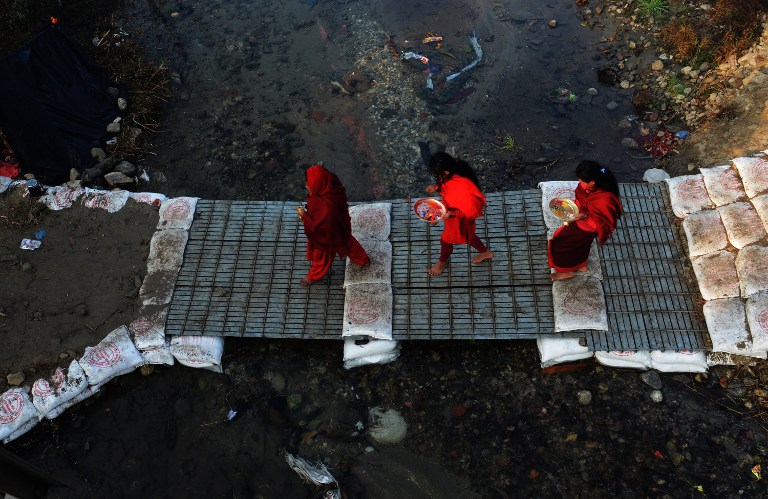
Nepalese Hindu devotees walk across a temporary bridge over the Shali River on the outskirts of Kathmandu on January  24, 2016. Hundreds of married and unmarried women in the Himalayan nation have started a month-long fast in the hope of a prosperous life and conjugal happiness. AFP PHOTO/Prakash MATHEMA / AFP PHOTO / PRAKASH MATHEMA
Nepalese Hindu devotees walk across a temporary bridge over the Shali River on the outskirts of Kathmandu on January 24, 2016. Hundreds of married and unmarried women in the Himalayan nation have started a month-long fast in the hope of a prosperous life and conjugal happiness. AFP PHOTO/Prakash MATHEMA / AFP PHOTO / PRAKASH MATHEMA

As counselors for the Meri Saathi helpline, midwife Hima Mishra and her team field hundreds of calls a day from people with questions about sex, pregnancy and abortion, helping to shed light on reproductive health rights in Nepal.


Hima Mishra’s office in Kathmandu is a tiny room staffed with seven smiling women wearing headphones. It may look like a small operation, but the women receive up to 150 calls a day from men and women across Nepal.

“Morning to night, our voices are the same. We are always happy,” says Mishra, who runs the team. “You would think that we are very stressed and tired, but we’re not.”

In 2011, Marie Stopes International (MSI) launched a free helpline number called Meri Saathi, which translates to “My Friend,” to provide counseling on a range of issues from safe abortion, contraception, masturbation, penis size, menstruation and safe sex.

In mountainous Nepal, where it can take a woman days to get to the nearest primary healthcare center and where premarital sex is taboo, the call center is a lifeline for thousands of Nepalis who have little or no access to accurate information.

Although abortion is legal in Nepal during the first 12 weeks of pregnancy or up until 18 weeks in cases such as rape and incest, deaths from unsafe abortion still account for more than 5 percent of recorded maternal deaths.

Since abortion was legalized in 2002, more than 800,000 womenhave received safe abortion services from over 500 certified clinics, but challenges remain, including a lack of skills among health workers and overcrowding at referral hospitals, according to the latest Department of Health Services annual report.

Another major barrier to women seeking safe abortion services is that many don’t know it’s legal. Only 38 percent of women in Nepal are aware of the law on abortion, according to the 2011 Nepal Demographic and Health Survey, and only one in two know where to access services.

While the government last year pledged to make abortion services free across the country, it hasn’t happened yet. Women who don’t go through organizations like MSI have to pay the equivalent of $10, making safe abortion unaffordable for those living in rural areas.

Mishra has been working at the Meri Saathi call center since it launched, and has watched its popularity grow from 150 calls a month to 150 a day. The team is planning to move to a bigger work space, add more staff members and extend the hours the hotline is open to keep up with the number of requests.

“We’re overloaded with calls,” she says. “We don’t want to miss people.”

The main purpose of the hotline is to educate people about their sexual health and reproductive rights. The center also offers counseling via live chat on its website and through Facebook and Twitter, and the Meri Saathi workers follow up on existing clients whenever they can.

At the moment, the team gets more calls from adolescent boys than women or girls, asking questions about safe-sex practices, how to manage their sexual desires and the bodily changes they are experiencing.

“I tell them that masturbation doesn’t harm their body and they should keep busy, study, do sports and be creative. I give them tips for what is best for their future,” Mishra says.

For young women who call, the primary concerns are sexual propositions outside of marriage, contraception, menstruation pain and access to safe abortions. Stories of women inserting iron bars or using other potentially fatal methods to try to give themselves an abortion are all too common.

Determined to stop that happening, the Meri Saathi team callers to an MSI clinic or, if they live too far away from one, to a listed organization, healthcare center or government hospital that provides safe abortions

But women are often either too scared to tell their husbands, or their husbands insist on keeping the baby, particularly if they are hoping for a boy. “Often women don’t want another baby and they beg me not to listen to their husband and ask if they can get an abortion alone,” Mishra says. “Husbands call the center and ask about their wife’s abortion. I tell them [family planning] is also a father’s responsibility.”
Some of the calls haunt the counselors long after they hang up the phone – like the time a 22-year-old man asked for Mishra’s advice because he was having a sexual relationship with his mother. But then there are the times when the counselors see how one phone call can change a life for the better. One of Mishra’s happiest memories is when she was able to prevent a 14-year-old girl from western Nepal from getting married after speaking with her mother.

For Mishra, the biggest reward comes from guiding young women safely through some of the most difficult times in their lives. “I feel so proud that I have saved so many youths from unsafe sex and so many women from unsafe abortions,” she says.

Ethiopia: Family Planning in Reducing, Maternal, Child Mortality

Ethiopia: Family Planning in Reducing, Maternal, Child Mortality

FP service,given without payment, has been started some decades ago

Family planning (FP) has become one of the key instruments that help regulate nation’s economic development and population growth balance. It fosters a healthy procreation and perpetuation. It as well allows the reduction of maternal, infant and child moralities. It has a great significance in protecting both would-be mothers and children.

But unable to introduce and access family planning methods and modern contraceptive techniques, many adolescent women , potential child bearing young women suffer a life-long anxiety. As such women do not resist some cultural barriers and related socioeconomic downsides, they were exposed to psychological influences and cultural discrimination. To prevent complications, adolescent women encounter in connection with unwanted pregnancy and related issues, they need equitable and accessible awareness deepening activities on family planning and contraceptive tools.

Speaking at a recent panel discussion organized in connection with World Contraception Day ceremony 26 Sept 2016 Maternal and Child Heath Expert Sr. Aster Teshome said Ethiopia is one of the three counties in sub Saharan Africa with the most rapid increase in modern contraceptive use. This is attributable to rigorous family planning programmes by the government and NGOs, through improvement in the health care infrastructure and government attention to meeting the MDG goals.

She further said that access to reproductive health services remains an issue for young women because of cultural, medical and financial barriers. Lack of access to reproductive health services result in increased risk of unplanned pregnancy, unsafe abortion; Sexual Transited Infections (STIs), HIV and early school attrition due to pregnancy. Accessing family planning can reduce maternal deaths by 40 per cent ,infant mortality by10 per cent and childhood mortality by 21 per cent.

She further said that trends of modern contraceptive use 2002-2011 EDHS indicated that Young women’s modern contraceptive use has increased substantially over the last decade. Increasing use could be due to the current changes in urbanization, education of girls and other development activities. However, in Ethiopia 28 per cent of adolescents aged between 15-19and 24 per cent of young women aged between 20-24 have had unintended pregnancies. Studies show that young people are significantly more likely to choose a friendly provider with an adequate supply of family planning commodities, she said.

Although modern FP service,given without payment, has been started some decades ago , it has not been so effective. Hence, expanding community-based distribution of FP services at the women’s door level through health extension program has been underlined.

FP is considered key for the country’s development . But Ethiopia is one of the three counties in sub Saharan Africa with the most rapid increase in modern contraceptive use. The result is ascribable to rigorous FP programmes, she said.

Lack of awareness about Sexual and Reproductive Health (SRH) matters, specifically about methods of contraception, is an important step towards gaining access to and using a suitable contraceptive method in a timely and effective manner.

Despite the increasing use of contraceptive methods by adolescents, many remain at risk of unintended pregnancy, for contraceptive method failure, inconsistent and improper use, lapses between discontinuing a method and starting a new contraceptive.

Providing contraception that is easy to use and highly effective with proper counseling regarding side effects affords adolescent women the opportunity to avoid unintended pregnancy.

She further said globally there is an estimated 153 million women with unmet need for FP;around 18 million women under the age of 20 give birth every year, representing up to one-fifth of all births, with almost 95 per cent of the cases occurring in developing countries.

Furthermore, young women of many poor communities are less likely to obtain contraceptive services. In sub-Saharan Africa uptake of SRH services among youth aged 15-24 remains low, placing millions of young people at risk of poor RH outcomes.

High adolescent birth rates(120 per1,000 girls aged15-place young girls in increased risk of complications related to pregnancy and childbirth represent a leading cause of mortality among adolescent girls.

Sexually active young people are also at risk of STI, including HIV. Young women are disproportionately affected by HIV with prevalence rates.

Furthermore, identifying strategies to make services more accessible and attractive to both current and future users, there is a call for knowing and understanding what prompts youths to choose between different types of contraceptive services.

What is more, leaders commitment should be stepped up to build the capacity of service providers thereby to improve quality of services to meet the specific needs of youths. Increasing the utilization of SRH services by young people is therefore critical to improve health outcomes, she said.

Modern family planning service was started in 1966.After 1980 it expanded FP services. The adoption of the population policy took effect in 1993. In1996, a Guideline for FP Services to guide health providers and managers to expand and ensure quality FP services in the country was released .

The German Foundation for World Population (DSW) Country Director Feyera Assefa said DSW has been engaged in creating linkages between population dynamics , sexual and reproductive health , poverty , environmental protection and sustainable development at the national level . DSW’s target area of interventions are adolescent and other young people , predominantly girls . Offering youth training, capacity building and financial support to the youth are given due emphasis. DSW has given special emphasis to playing its role in easing youths’ various reproductive health and other socioeconomic challenges.

Feyera added that like other international days, world contraception day is an epoch making occasion on which DSW,aong its partners, celebrates and disseminates awareness about contraception .

Bayer East African Ltd Head of Health Care Progrmmes Bemard Mutua said that Bayer operates placing focal attention on cancer and family planning. Bayer has been engaged in a global innovation enterprise with core competencies in the Life Science fields of agriculture and health care . It actively sets trends in research-intensive areas it is also committed to the principles of sustainable development.

“To fight HIV effectively we must insist upon the removal of anti-LGBT legislation globally”

“To fight HIV effectively we must insist upon the removal of anti-LGBT legislation globally”

2016-10-06

Criminalisation, stigma and HIV transmission

pride-in-space

Anti-gay legislation, globally, is leading to higher rates of transmission for HIV. The countries with the highest populations of HIV positive people all criminalise gay men, or have a recent history of doing so. 77 countries still criminalise being gay. These countries do not allow LGBT people to openly express their identities, thereby preventing the development of LGBT rights movements and exacerbating HIV transmission rates.

Many LGBT people living with HIV face a dual stigma, that of being LGBT and that of being HIV positive. There is a clear link between criminalisation, stigma and HIV transmission. As we move out of the European Union, we must ensure that global LGBT equality remains a priority for UK legislators.

In Africa being gay remains illegal in 36 out of 54 countries. Africa has the highest prevalence of HIV in the world. Gay men in Africa are twice as likely to be HIV positive as their straight counterparts. Most African countries have European colonial era anti-LGBT legislation. Criminalisation entrenches homophobia. The African LGBT community is largely underground. Underground communities are harder to reach and are less informed about HIV or safe sex. LGBT people are less likely to use HIV testing services and are prohibited from accessing antiviral medication. Health professionals often discriminate against LGBT people and there are few government-led LGBT inclusive HIV initiatives.

Uganda and Senegal are among the worst on anti-LGBT legislation and its implementation. In Uganda the legislative situation is actually getting worse for LGBT people. In 2014, the Ugandan government attempted to bring in the Anti-Homosexuality Act, which was only overturned on a technicality. In Uganda, LGBT people are reluctant to discuss their sexual identities with health workers who, technically, are obligated to report them to the authorities for same-sex practices.

Senegal has had a number of arrests and convictions for LGBT activity in recent years. In Senegal homosexuality is punishable by up to five years in prison and it is also one of the few jurisdictions to have criminalised female homosexuality. Last year, in one raid, seven men were arrested and sentenced to six months in prison. Such raids are thankfully uncommon, and their sentencing caused international outrage, but this case is indicative of the hostile atmosphere LGBT people have to deal with in Senegal. Amongst the items found in their possession were condoms. The Senegalese government was effectively punishing these men for practising safe sex, the condoms evidence of their criminality. Ugandan and Senegalese health workers are reluctant to engage with LGBT people, as they may be perceived as encouraging illegal activity.

In Mozambique, unlike in Uganda and Senegal, the existing colonial era anti-LGBT legislation, a legacy of Portuguese colonialism, has been repealed. Although legally there has been an improvement in their status, LGBT people face continued discrimination from government organisations. The government remains reluctant to encourage LGBT inclusive training for sexual health workers, or even register the country’s one LGBT organisation, which is called Lambda. Some LGBT people have been refused treatment for sexually transmitted infections, while trans people have been made to change their clothing before health workers will treat them.

In Caribbean countries where same-sex relationships are criminalised, the rate of incidence for HIV is a one in four, while in Caribbean countries where there is no anti-gay legislation it is one in 15. Approximately thirty per cent of Jamaican men who have sex with men are HIV positive, compared to a rate of 1.6 % in the general population. In Jamaica homophobia is rife. Anti-LGBT legislation creates the perception that violence against LGBT people may be tolerated. LGBT people cannot discuss their sexual identities. Men who are diagnosed as HIV positive are often “accused” of being gay. Here, the dual stigma, of being gay and that of being HIV positive, is at its most apparent. LGBT people who are HIV positive are the most likely to be victimised and face violence.

The LGBT community have been at the forefront of the fight against HIV in the UK. Over the last thirty years, we have pulled together at a time of crisis to save our neighbours, friends and lovers. We ensured our community knew about the HIV virus. We cared for those living with HIV. We confronted the stigma associated with HIV. It was the LGBT rights movement in the UK and the USA which first responded in an empathetic and effective way to the HIV epidemic. Anti-LGBT legislation prevents LGBT people coming together to confront HIV.

To fight HIV effectively we must insist upon the removal of anti-LGBT legislation globally. Where criminalisation exists and homophobia has been institutionalised, access to HIV services is difficult and violence against LGBT people is rife. Moving out of the EU, we must not be shy of using our position as the world’s fifth largest economy to demand concessions for LGBT people. The UK can pride itself on being one of the world’s most tolerant countries on LGBT issues and we should not be afraid of advancing the rights of LGBT people globally. We should not allow our work to promote LGBT rights globally to be diminished by leaving the EU, but instead embrace our freedom to promote LGBT rights more assiduously. Let us embrace this opportunity to increase our global influence on LGBT rights. We are a core part of the global LGBT rights movement.

Follow Phillip on Twitter @philipcbaldwin

Study Links Sailors’ Porn Use, Sexual Dysfunction

Study Links Sailors’ Porn Use, Sexual Dysfunction

2016-10-05

A case study of three active-duty service members who saw Navy doctors found their heavy use of pornography to be connected to erectile dysfunction and other sexual problems within their romantic relationships — a finding the Navy is watching without comment, for now.

The independent study, undertaken by four San Diego-based naval health professionals, seeks to explain “sharp increases” in sexual difficulties among men under 40 in recent years and correlation with the prevalence of internet porn available for streaming, a technology that dates to 2006.

Published in the journal “Behavioral Sciences” in August, the study suggested health care providers need to more thoroughly take internet pornography use into account when diagnosing sexual problems, noting that some problems can be reversed simply by having a patient stop using pornography.

According to the report, diagnoses of erectile dysfunction in active-duty male service members more than doubled between 2004 and 2013.

“Future researchers will need to take into account the unique properties and impact of today’s streaming Internet delivery of pornography,” the study’s authors wrote. “In addition, Internet pornography consumption during early adolescence, or before, may be a key variable.”

One of the study’s authors, Dr. Andrew Doan, head of the Addictions and Resilience Research department at Naval Medical Center San Diego, said in a statement that the study did not reflect the views of the center or of the Navy and declined to discuss the research more in-depth.

“Research on this topic is still underway by the authors,” he said. “Therefore, it is too early to discuss this topic in open forum.”

While multiple studies and reports have described the connection between pornography use and sexual and relationship problems, this may be the first to study active-duty service members on the topic. Doan said the study did not explore the effects of deployments, or other issues specific to the military, on the problem.

But his comments about the study’s most significant finding suggest this is an issue that may be tied to mission readiness.

“Emotional health is linked to sexual health, directly affecting human resilience and service members’ abilities to perform at their best,” Doan said.

The three service members described in the case studies had previously seen doctors, two for problems including erectile dysfunction, low sexual desire and sexual difficulties with their partners, and one for mental health reasons. All three reported a trend of increasing internet pornography use, and two reported escalation to more extreme genres of internet porn.

In the first case, a 20-year-old enlisted service member, whose service branch was not identified, reported erectile dysfunction and inability to climax beginning during a six-month overseas deployment. When he returned, these persistent sexual issues began to cause problems in his relationship with his fiancee. When he cut back significantly on his internet porn use and stopped using a sex toy he had brought during his deployment, relations with his fiancee improved, and so did the relationship.

The second report described a 40-year-old service member with 17 years of service who had increased his use of internet pornography after his youngest child left for college and had begun to find his wife less stimulating than the online images. Care providers recommended he cut back on pornography use, but he found he couldn’t. While he was referred to sex behavioral therapy, he declined to make an appointment, preferring to work the issues out on his own, according to the report.

In the third case, a 24-year-old junior enlisted sailor saw a doctor after attempting suicide by overdose. When his medical history was taken, he revealed he had spent more than five hours a day viewing online pornography over the last six months, and had noticed diminished interest in his wife during this time.

“When he became aware of his excessive use of pornography, he stopped viewing it completely, telling his interviewer he was afraid that if he viewed it to any extent he would find himself overusing it again,” researchers wrote. “He reported that after he ceased using pornography his erectile dysfunction disappeared.”

More study is needed, the authors wrote, to prove causation between internet pornography use and sexual difficulties by removing the variable of pornography and observing how study subjects respond.

Doan declined to comment on plans for future research, citing policy.

— Hope Hodge Seck can be reached at hope.seck@military.com. Follow her on Twitter at@HopeSeck.